Your home’s heating and cooling system can be working properly while your rooms still feel too hot, too cold, or difficult to keep comfortable. One possible reason is hidden air leakage in the ductwork.
Air ducts carry conditioned air from your HVAC system to different areas of your home. When those ducts have gaps, cracks, loose connections, or other leaks, heated or cooled air can escape before it reaches the rooms where you need it. This can make your HVAC system work harder and may contribute to uneven temperatures and higher energy use.
Aeroseal duct sealing offers a modern approach to addressing these hidden leaks from inside the duct system. Instead of relying only on manually accessible joints, the technology is designed to locate and seal leaks throughout the ductwork.
What Is Aeroseal Duct Sealing?
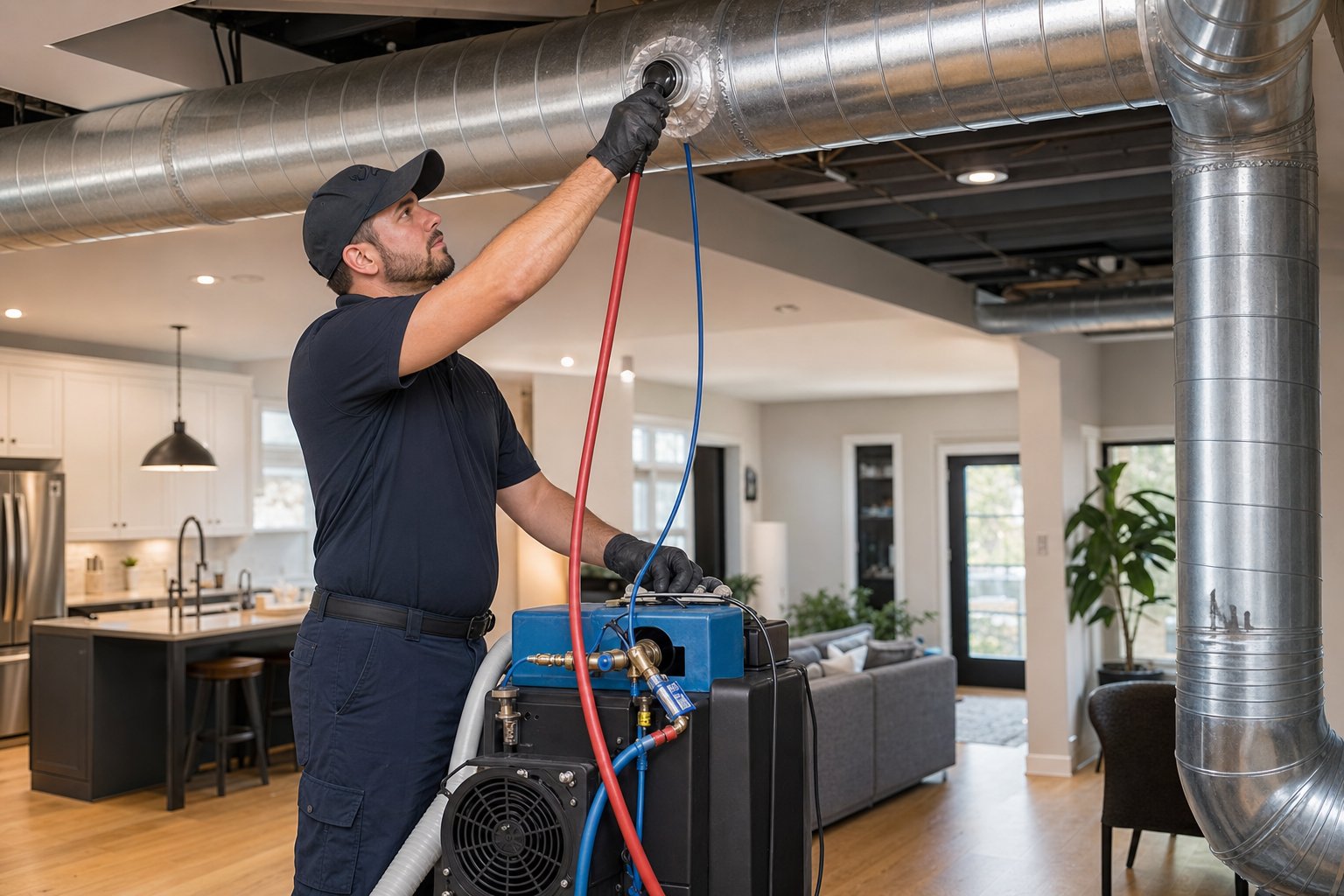
Aeroseal is a duct sealing technology designed to reduce air leakage in forced-air HVAC systems. The process uses a sealant that is introduced into the ductwork while the system is temporarily isolated from the rest of the home.
As the sealant moves through the ducts, particles are carried toward leakage points. The material accumulates around these openings and helps seal them.
The objective is to reduce unwanted air loss and improve the efficiency of the duct system.
This approach can be particularly useful because many duct leaks occur in areas that are difficult to reach manually, including connections, seams, and sections located behind walls, ceilings, or other enclosed spaces.
Why Leaky Ductwork Is a Problem
Your HVAC system depends on properly functioning ductwork to distribute conditioned air.
When air escapes through leaks, several problems can occur.
Uneven Temperatures
Some rooms may receive less conditioned air than others. This can result in noticeable hot and cold spots throughout the home.
Higher Energy Use
If conditioned air escapes before reaching its destination, your heating and cooling equipment may need to operate longer to maintain the desired temperature.
Reduced Comfort
A home can feel uncomfortable even when the thermostat shows the correct setting.
Air Quality Concerns
Depending on where leaks occur, ductwork can potentially draw in dust or other unwanted particles from surrounding areas.
HVAC Strain
Persistent duct leakage can contribute to inefficient system operation, potentially increasing wear over time.
Addressing leakage can therefore be an important part of a broader home energy efficiency strategy.
Signs Your Ductwork May Be Leaking
Duct leaks are often hidden, but homeowners may notice clues that suggest a problem.
Common signs include:
- Rooms that are consistently too warm or too cold
- High heating or cooling bills
- Weak airflow from certain vents
- Excessive dust
- HVAC systems that seem to run constantly
- Difficulty maintaining the thermostat setting
- Poor comfort between different floors
- Whistling or unusual sounds near duct connections
These symptoms can have multiple causes, so a professional HVAC assessment is recommended before assuming that duct leakage is responsible.
How Aeroseal Works
The Aeroseal process generally involves several stages.
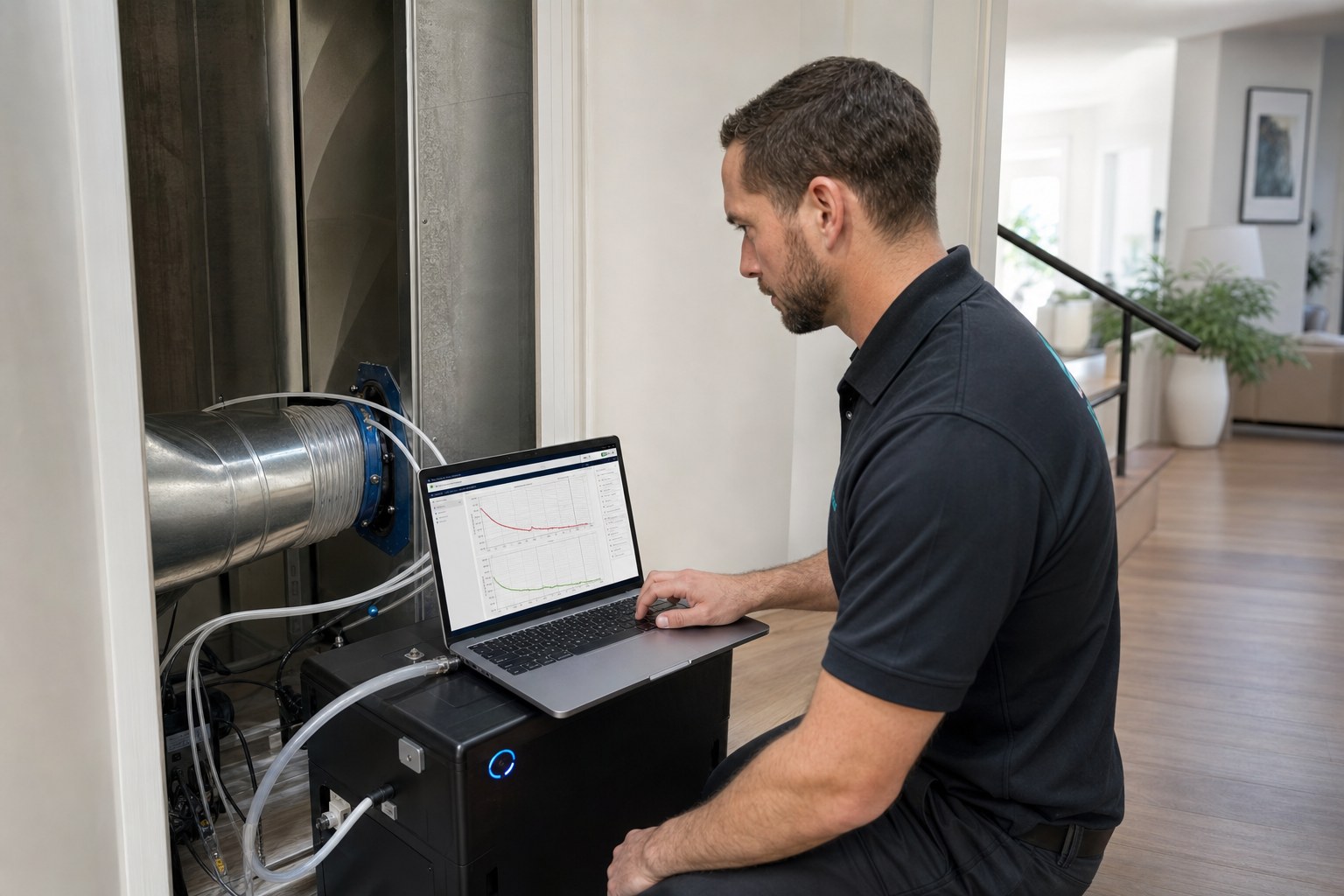
1. Duct System Assessment
The ductwork is evaluated to identify the condition of the system and establish a baseline for leakage.
2. Preparation
Vents and registers are temporarily sealed, while appropriate equipment and openings are prepared for the treatment process.
3. Sealant Introduction
The sealant is introduced into the duct system using specialized equipment.
4. Leak Sealing
As the sealant travels through the ducts, particles move toward openings and accumulate around leakage points.
5. Verification
After treatment, the system can be tested again to determine how much leakage has been reduced.
The exact process and equipment setup can vary depending on the property’s HVAC configuration and ductwork.
Why Professional Duct Sealing Is Important
Some homeowners attempt to seal accessible duct joints using conventional materials. While manual sealing can be useful for visible problems, it may not address leaks located throughout inaccessible sections.
Professional duct sealing can provide a more comprehensive approach because the treatment is designed to reach leaks that may not be physically accessible.
The service page for Green Seal Energy explains that Aeroseal technology is intended to seal leaks from the inside of ductwork, including difficult-to-reach areas.
Benefits of Aeroseal Duct Sealing
Improved Energy Efficiency
Reducing air leakage can help more conditioned air reach the intended rooms, potentially reducing wasted energy.
Better Indoor Comfort
When the duct system distributes air more effectively, temperature differences between rooms may become less noticeable.
Improved Air Distribution
Sealing leaks can help the HVAC system deliver conditioned air more consistently.
Reduced HVAC Workload
A better-sealed duct system may help the equipment operate more efficiently under the same household demands.
Long-Term Home Improvement
Duct sealing can complement other energy-saving upgrades such as insulation, efficient HVAC equipment, smart thermostats, and weatherization.
Aeroseal vs. Traditional Duct Sealing
Traditional duct sealing generally involves manually locating accessible leaks and applying a sealing material to those areas.
This method can be effective for visible or easily accessible gaps. However, some ductwork may be located behind drywall, above ceilings, or in difficult-to-reach areas.
Aeroseal takes a different approach by circulating sealant through the duct system so that leakage points can be addressed from the inside.
This does not necessarily mean one method is appropriate for every property. A professional assessment can help determine whether Aeroseal, conventional sealing, repairs, replacement, or a combination of approaches makes the most sense.
Can Duct Sealing Lower Energy Bills?
Reducing duct leakage can help reduce the amount of conditioned air lost before it reaches living spaces. This may improve HVAC efficiency and potentially contribute to lower energy consumption.
However, energy savings vary from home to home.
Factors such as climate, duct condition, HVAC efficiency, insulation, thermostat settings, house size, occupancy, and existing leakage levels can all affect the outcome.
Homeowners should be cautious of contractors promising a specific percentage of savings without first evaluating the property.
How Duct Sealing Can Improve Comfort
Imagine setting your thermostat to a comfortable temperature, but one bedroom remains noticeably warmer than the rest of the house.
This could be caused by several issues, including insulation problems, airflow restrictions, equipment sizing, or duct leakage.
If leaking ducts are contributing to the problem, sealing them can help more conditioned air reach the intended space.
This may be especially beneficial in homes with multiple levels, long duct runs, additions, or rooms located far from the HVAC equipment.
Does Every Home Need Aeroseal?
No. Aeroseal is not automatically necessary for every home.
If ductwork is already well sealed and properly designed, another solution may be more appropriate. In some situations, damaged or poorly designed ducts may require physical repair or replacement rather than sealing alone.
A professional evaluation can identify whether significant leakage exists and whether the duct system is a good candidate for treatment.
The goal should always be to address the actual cause of HVAC performance problems rather than applying a single solution to every property.
Combining Duct Sealing With Other Energy Improvements
Duct sealing works best when considered as part of a complete home energy strategy.
Other improvements may include:
Attic Insulation
Adequate insulation can help reduce heat transfer between the living space and attic.
Air Sealing
Sealing gaps around windows, doors, plumbing penetrations, and other openings can reduce unwanted air movement.
HVAC Maintenance
Regular maintenance can help keep heating and cooling equipment operating properly.
Smart Thermostat
Programmable or smart controls can help manage temperatures according to household schedules.
Efficient HVAC Equipment
When replacement becomes necessary, high-efficiency heating and cooling equipment may provide long-term energy benefits.
A professional energy assessment can help prioritize improvements based on the home’s specific needs.
Why Choose Professional Aeroseal Service?
Ductwork is often hidden from view, making it difficult for homeowners to understand its condition.
A professional provider has the equipment and experience necessary to evaluate leakage and conduct the sealing process properly.
The Green Seal Energy service page describes Aeroseal duct sealing as a way to address leaks in duct systems and improve home comfort and energy performance.
Before scheduling service, homeowners should ask about the assessment process, testing procedures, expected results, warranty coverage, and whether additional duct repairs are recommended.
Selling Service Title
Seal Hidden Duct Leaks and Make Your Home More Comfortable
Are some rooms always too hot or too cold? Is your HVAC system working harder than it should? Hidden duct leakage could be contributing to poor comfort and wasted energy.
Aeroseal duct sealing provides a modern way to address leaks throughout the duct system, including areas that may be difficult to access manually. A professional evaluation can determine whether this technology is appropriate for your home.
If you’re looking for a practical way to improve HVAC performance and home comfort, schedule a professional duct leakage assessment today.
Frequently Asked Questions
1. What is Aeroseal duct sealing?
Aeroseal is a duct sealing technology that uses a specialized sealant circulated through the ductwork to help seal air leaks from inside the system.
2. How do I know if my ducts are leaking?
Common warning signs include uneven room temperatures, weak airflow, high energy use, excessive dust, and an HVAC system that runs longer than expected. Professional testing can confirm whether leakage exists.
3. Can Aeroseal improve indoor air quality?
Sealing duct leaks may help reduce the movement of unwanted air and contaminants through certain leakage points. However, indoor air quality depends on many factors, including filtration, ventilation, humidity, and overall home conditions.
4. How long does duct sealing take?
The timeline depends on the home’s size, duct configuration, accessibility, and condition. A professional provider can give a more accurate estimate after evaluating the system.
5. Is Aeroseal better than replacing ductwork?
Not necessarily. Aeroseal may be appropriate for certain leakage problems, while severely damaged, undersized, or improperly designed ducts may require repair or replacement. A professional assessment can help determine the right solution.
Conclusion
Leaky ductwork can make it harder for your HVAC system to deliver consistent comfort throughout your home. Lost conditioned air may contribute to uneven temperatures, unnecessary energy use, and increased system workload.
Aeroseal duct sealing provides an innovative way to target hidden leaks from inside the duct system. While it is not the right solution for every property, a professional assessment can help determine whether sealing could improve your home’s duct performance.
For homeowners looking to address hidden duct leaks and improve HVAC efficiency, Green Seal Energy Kansas City provides Aeroseal duct sealing services designed to support better airflow, comfort, and energy performance.