A duct leakage test in Kansas City can reveal whether your HVAC system is delivering the comfort and efficiency it promises, or quietly wasting energy through gaps you cannot see. Many homeowners in the KC metro are surprised to learn their duct systems lose 20 to 30 percent of conditioned air before it reaches a single room. Understanding what the test measures, what the numbers mean, and what happens when you fail gives you the information to make smart decisions about your home. This guide covers how duct leakage testing works, what common failure points look like in Kansas City homes, and how Aeroseal fixes the problem without opening walls.
What Duct Leakage Testing Actually Measures
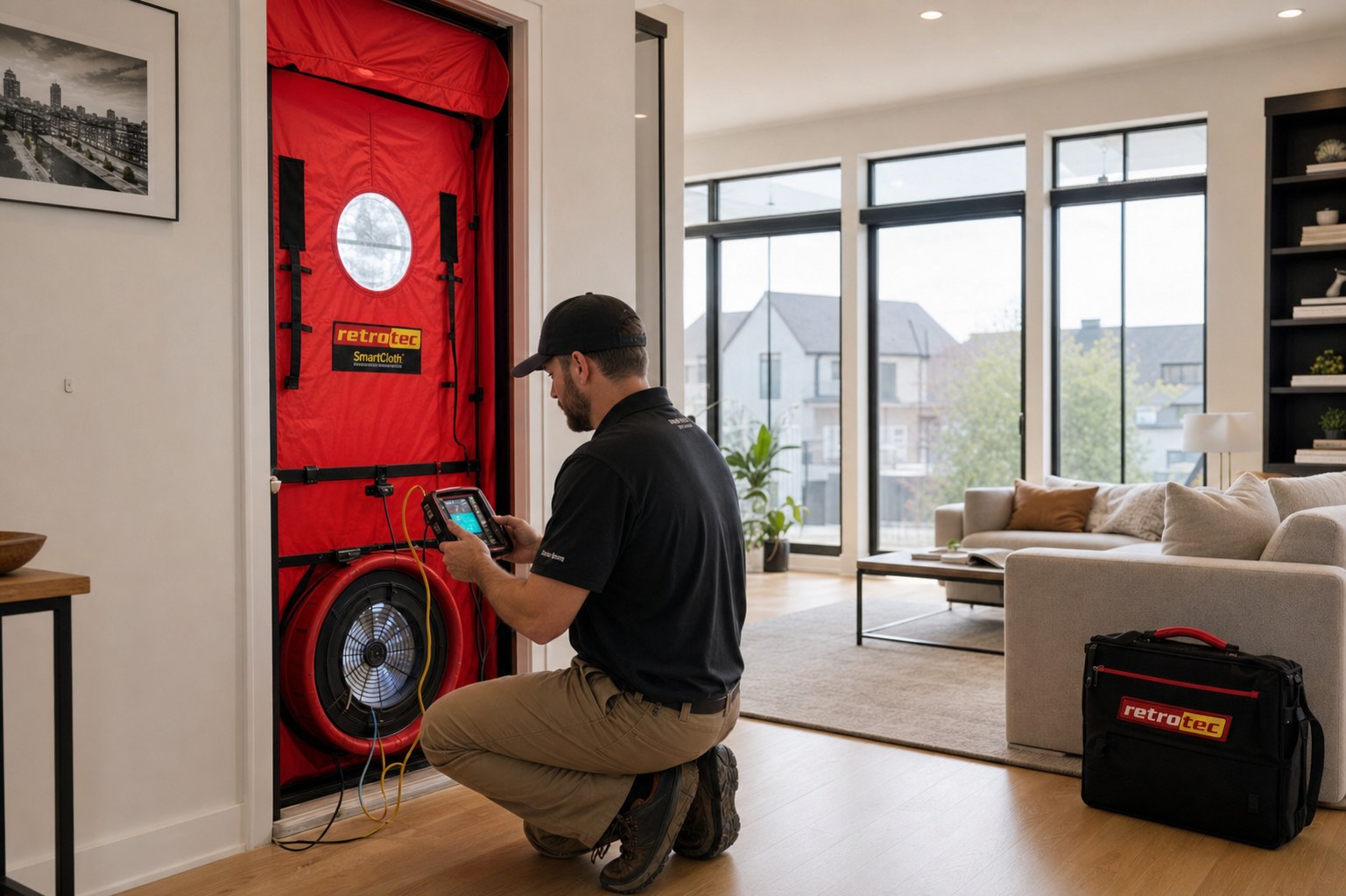
A duct leakage test measures how much air escapes from your duct system under pressure. The most common measurement you will see on a test report is CFM25, which stands for cubic feet per minute at 25 pascals of pressure. The test depressurizes or pressurizes the duct system to 25 pascals above or below the surrounding air, then measures the airflow required to maintain that pressure. The higher the CFM25 reading, the more air is leaking out.
Test results are often expressed as a percentage of the system’s total air flow capacity. A result of “10 percent leakage to outside” means 10 percent of your system’s air is escaping into unconditioned spaces like your attic or crawlspace before it reaches the living area. ASHRAE Standard 152 provides the method most duct leakage testers follow in the Kansas City area, and it separates total leakage from leakage to the outside, which is the more important number for energy efficiency.
For reference, most energy efficiency programs and code standards target total duct leakage of 4 CFM25 per 100 square feet of conditioned floor area or less. A home in Overland Park with 2,000 square feet of conditioned space should have total leakage of 80 CFM25 or less to pass most program standards. Many older homes in Johnson County and Jackson County score two to three times that amount on their first test.
What a Passing Result Looks Like Under ASHRAE 152
ASHRAE 152 defines testing procedures but does not set a universal pass/fail threshold. The pass threshold depends on the program, code requirement, or utility rebate you are pursuing. Here are the benchmarks that matter most for Kansas City homeowners.
For EVERGY rebate programs, which Green Seal Energy helps Kansas City homeowners access as EVERGY’s number one certified rebate partner, duct systems generally need to demonstrate measurable improvement in leakage rates. Pre- and post-treatment testing documents that improvement.
For homes pursuing ENERGY STAR certification, total duct leakage must be 4 CFM25 per 100 square feet of conditioned floor area or less. Leakage to the outside must be 2 CFM25 per 100 square feet or less. ENERGY STAR’s duct sealing requirements apply to both new construction and existing home retrofits under certain programs.
For existing homes without a certification goal, the practical benchmark is simple: if leakage to outside is more than 10 percent of system capacity, you are likely losing enough conditioned air to notice it in your energy bills and comfort levels. If your test shows 15 percent or higher, the problem is serious enough to address promptly.
What Failing Means for Your Energy Bills
Failing a duct leakage test is not just a number on a report. It has direct consequences for what you pay to heat and cool your Kansas City home.
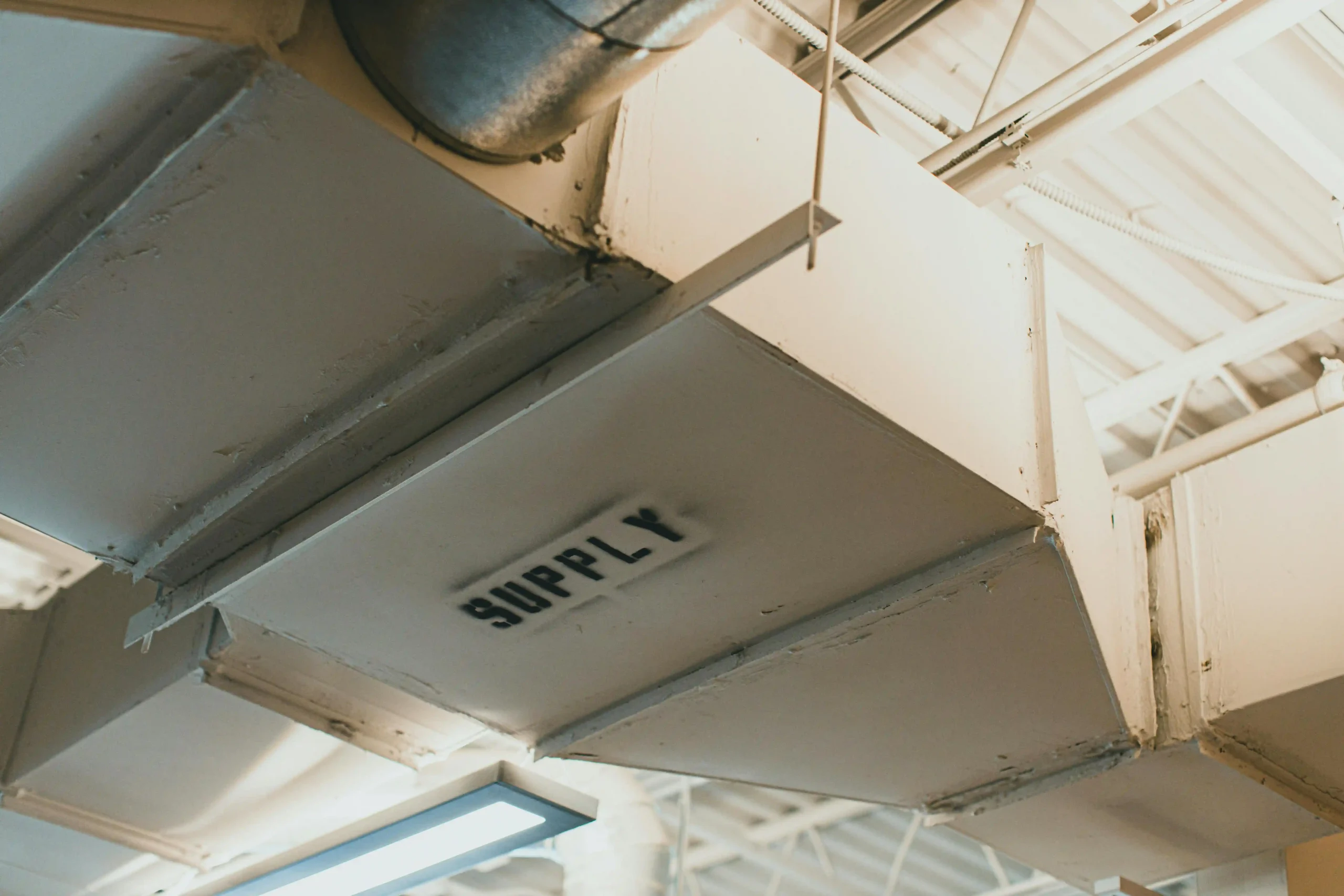
Ducts that run through unconditioned spaces are the primary problem in most KC homes. In Overland Park, Lee’s Summit, and Shawnee, it is common to find duct systems running through attics that reach 140 degrees in summer and drop below freezing in winter. When conditioned air leaks into those spaces, your HVAC system has to work harder to compensate, running longer cycles and wearing out faster.
A home with 20 percent duct leakage to outside is essentially paying to condition its attic. On a $200 monthly cooling bill, that translates to roughly $40 in wasted energy every month during peak season. Over a year, that adds up to $400 or more, just from duct leaks. Homes with older flexible ductwork or systems that have never been sealed often land in this range.
Beyond energy costs, leaky ducts affect air quality. Gaps in return ducts can pull attic air, crawlspace air, and the particles those spaces contain directly into your living area. In the Kansas City metro, where humidity runs high in summer and pollen counts are significant in spring, this matters to allergy sufferers and anyone concerned about indoor air quality.
See our HVAC efficiency services page for more on how duct performance connects to overall system efficiency.
Common Failure Points in Kansas City Homes
Duct systems in the KC metro fail leakage tests for predictable reasons. Knowing the common failure points helps you understand what a test is looking for and why manual repairs often miss a significant portion of the leakage.
Duct board connections. Older homes in Johnson County and Jackson County frequently have fiberglass duct board construction. The connections between sections rely on tape that dries out and separates over time, especially in attics where temperatures cycle from extreme heat to freezing year after year.
Flex duct connections. Flexible ducts are common in attics and crawlspaces. The collars where flex duct attaches to metal boots and plenums are a frequent leak point. These connections are often held with only a zip tie or a strip of duct tape, neither of which lasts more than a few years.
Supply plenum leaks. The main distribution box attached to your air handler is often the largest single leak point in a system. Seams, access panels, and connections to branch ducts are all potential gaps.
Return air pathways. Some systems use wall cavities or floor joists as return air pathways. These construction-cavity returns leak heavily because there is no actual duct material sealing them.
Register boot connections. Where a duct terminates at a floor or ceiling register, the boot fitting connects to the subfloor or drywall. These connections often have gaps around the perimeter that allow conditioned air to escape into the wall or attic cavity before it ever enters the room.
How Aeroseal Fixes Duct Leaks Without Opening Walls
Traditional duct sealing requires physical access to every leak point. For ducts in attics, that means cramped, hot work. For ducts running inside walls or under concrete slabs, it may mean the leak simply cannot be addressed without major demolition. Aeroseal solves this problem from the inside.
The Aeroseal process pressurizes your duct system and injects an atomized polymer sealant into the air stream. Sealant particles travel through the ducts and accumulate at gap sites, building up and sealing each leak from the inside. The process reaches every part of the system, including sections inside walls, under floors, and in tight attic spaces that would be impossible to access manually.
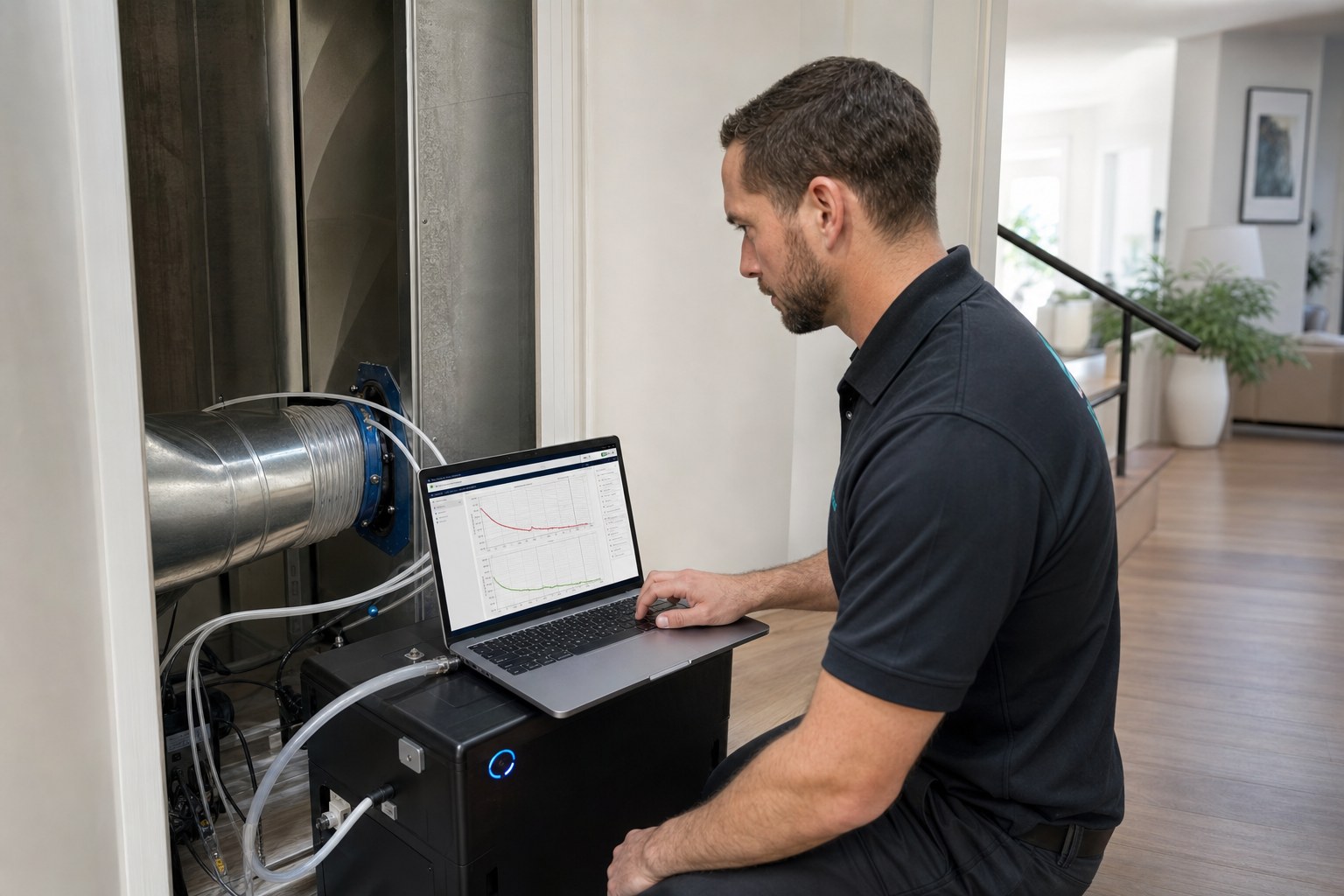
The result is verified in real time. A laptop monitoring station displays your leakage rate throughout the process, so both you and the technician can see the improvement as it happens. The process typically takes two to four hours for a standard Kansas City home. A printed certificate documents the before and after leakage numbers for your records, rebate applications, or home sale documentation.
Learn more about our Aeroseal duct sealing service and what the process looks like in a Kansas City home.
Frequently Asked Questions
How much does a duct leakage test cost in Kansas City?
A standalone duct leakage test in the Kansas City metro typically runs between $150 and $300, depending on the size of your home and the scope of the testing. When testing is combined with Aeroseal treatment, the test cost is included in the overall service package. Green Seal Energy performs pre- and post-treatment testing as part of every Aeroseal job to document the improvement. Call (816) 200-0129 for current pricing.
Do I need a duct leakage test before Aeroseal?
The Aeroseal process includes a pre-treatment leakage measurement as part of the setup. You do not need to schedule a separate test first. The initial measurement establishes your baseline, and the real-time monitoring during treatment shows the improvement as the sealant builds up. The final post-treatment test becomes your official documented result. If you already have a test report from a home energy audit, our technicians can use that data to plan the treatment.
How do I know if my ducts need testing?
Common signs that your duct system may have significant leakage include uneven temperatures between rooms, high energy bills that have increased without a clear reason, rooms that are consistently harder to heat or cool than others, excessive dust accumulation on vents or furniture, and a home that feels humid in summer even when the AC is running. If your home was built before 2000 and the ducts have never been sealed, a test is worth scheduling regardless of symptoms.
Can duct leakage testing identify other duct problems?
Duct leakage testing measures air loss specifically. It does not assess insulation condition, mold, debris accumulation, or crushed flexible duct sections. A complete picture of your duct system health may also involve an inspection for physical damage and an assessment of insulation levels. Green Seal Energy offers residential duct sealing services and can evaluate your full system during a service visit. Call (816) 200-0129 to schedule.
Ready to Know Your Numbers?
A duct leakage test gives you the facts about your HVAC system’s real performance. For Kansas City homeowners dealing with high energy bills, uneven temperatures, or simply wanting to know where their money is going, the test is the starting point. Green Seal Energy has tested and sealed hundreds of duct systems across Overland Park, Lee’s Summit, Olathe, Shawnee, and throughout the KC metro.
Call Green Seal Energy at (816) 200-0129 or schedule online to book your duct leakage test and find out exactly what is happening inside your duct system.