If you have been wondering what a home energy audit costs in Kansas City MO, you are not alone. The term gets used loosely to describe everything from a 30-minute walkthrough to a full blower door test and infrared scan, and the price range reflects that difference. Understanding what you are actually paying for, how the audit type affects what you learn, and how EVERGY-certified audits connect to real rebate dollars will help you decide which path makes sense for your home. This guide breaks down the numbers, explains what each type of audit includes, and shows how the audit fits into a complete picture of your home’s energy performance.
What a Home Energy Audit Costs in Kansas City: Basic vs. Comprehensive
Home energy audit pricing in the Kansas City MO area falls into two main tiers, and the difference in what you get is significant.
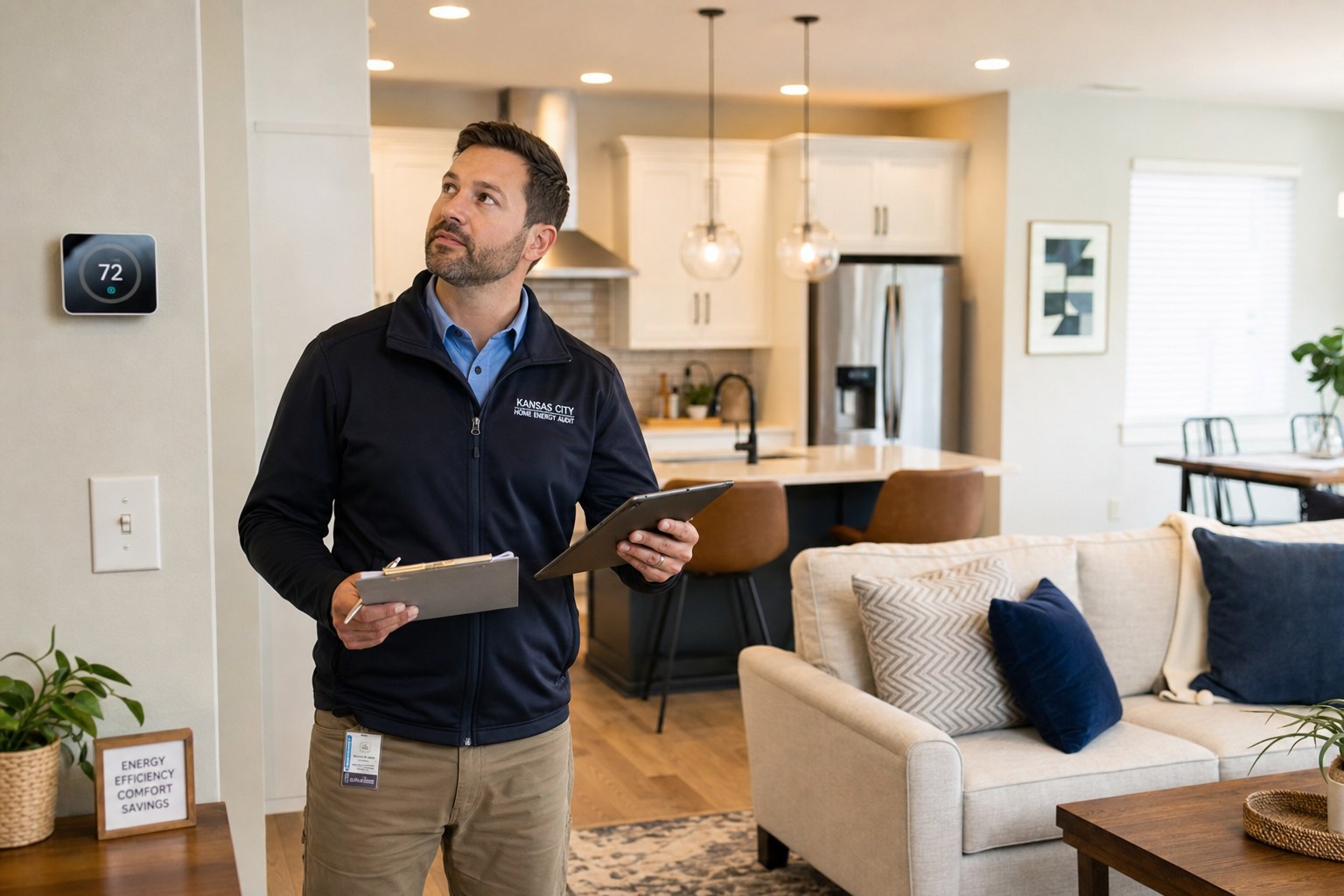
A basic audit, sometimes called a walkthrough assessment, typically runs between $100 and $250. An auditor visits your home, reviews your utility bills, visually inspects insulation levels, checks windows and doors for obvious gaps, and looks at your HVAC equipment. The output is a written report with general recommendations. This type of audit can identify obvious problems but relies primarily on visual inspection rather than measurement. It will not tell you your actual air leakage rate, where your duct leaks are located, or how much energy specific improvements would save.
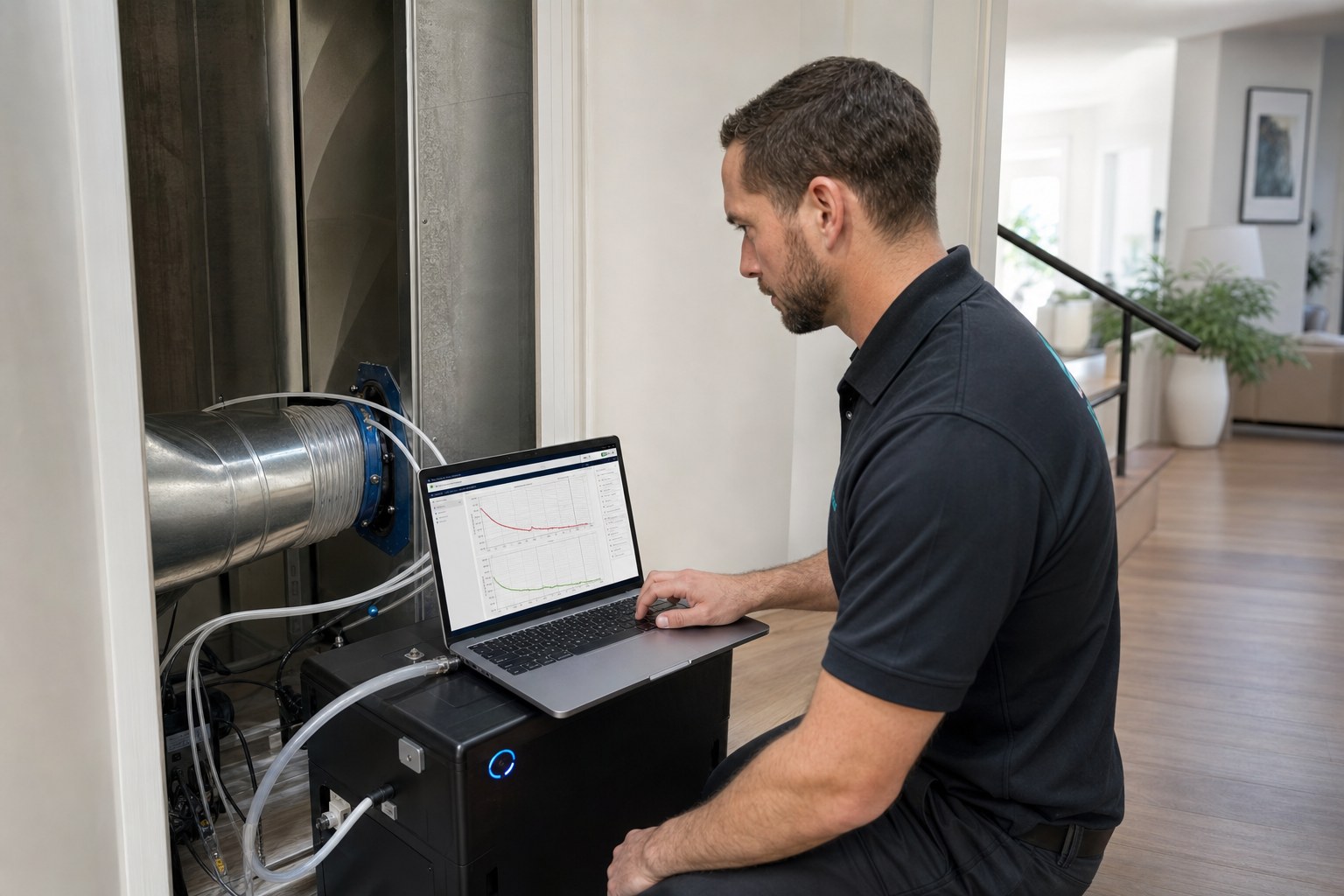
A comprehensive or diagnostic audit typically runs between $300 and $500 in the Kansas City metro. This includes a blower door test, which measures your home’s air leakage rate in a quantified and verifiable way. It may also include a duct leakage test, an infrared camera scan to locate insulation gaps and air movement, and a combustion safety test if your home has gas appliances. The report from a comprehensive audit gives you specific measurements, ranked improvement priorities, and projected savings estimates tied to actual numbers rather than general rules of thumb.
For homeowners who want to pursue utility rebates through EVERGY, the comprehensive diagnostic audit is the relevant starting point. EVERGY requires documented baseline measurements to qualify improvements for rebates, and a visual-only walkthrough does not produce the data those programs need.
What EVERGY-Certified Audits Include and How They Connect to Rebates
EVERGY, the primary utility serving the Kansas City metro on both the Kansas and Missouri sides, offers rebates for qualified energy efficiency improvements through its residential programs. Green Seal Energy is EVERGY’s number one certified rebate partner, which means we can connect your audit results directly to rebate eligibility and handle the documentation process.
An EVERGY-certified audit follows a defined protocol that includes the blower door test, duct leakage test, and a full building envelope assessment. The resulting data becomes the baseline against which improvements are measured. When you complete qualifying work, such as Aeroseal duct sealing or building envelope air sealing, the post-improvement test results demonstrate the change and support your rebate application.
The rebate values available through EVERGY programs can meaningfully offset the cost of improvement work. Exact rebate amounts change based on program funding and the specific work completed, so the most accurate figure comes from a direct conversation with our team. What matters is that participating in an EVERGY-certified audit and improvement pathway means the cost of the audit itself is a step toward documented savings, not just an expense.
For more on how the efficiency process connects to HVAC performance, see our HVAC efficiency services page.
The Home Energy Audit Checklist: What Auditors Look At
Knowing what a good auditor covers helps you evaluate whether the service you are buying matches what your home actually needs. Here is what a comprehensive audit in the Kansas City area should include.
Utility bill review. The auditor should look at 12 months of utility bills to establish baseline consumption and identify seasonal patterns that hint at specific problem types.
Blower door test. The blower door depressurizes your home and measures the total air leakage rate in ACH50, or air changes per hour at 50 pascals. A well-sealed Kansas City home should be below 5 ACH50. Many older homes in the metro score between 8 and 15.
Duct leakage test. A separate test measures how much air your duct system loses before it reaches the living area. See our Aeroseal duct sealing page for details on what these numbers mean and how they affect your bills.
Infrared scan. An infrared camera shows temperature differences through walls and ceilings that indicate missing or damaged insulation and air movement pathways. This is especially useful in older homes in Johnson County and Jackson County where insulation was added incrementally over decades.
HVAC system inspection. The auditor should document equipment age, efficiency ratings, maintenance condition, and whether the system is properly sized for your home.
Combustion safety testing. For homes with gas furnaces, water heaters, or fireplaces, the audit should include a combustion safety test to verify that depressurizing the home does not create a backdraft condition.
Attic and crawlspace assessment. Insulation levels, ventilation, and moisture conditions in unconditioned spaces directly affect your home’s energy performance and durability.
How Green Seal Energy’s Audit-to-Aeroseal Pathway Works
One of the most common frustrations homeowners in Kansas City MO express after an energy audit is receiving a list of recommendations with no clear path to action. The audit identifies problems, but following through requires coordinating multiple contractors, tracking rebate paperwork, and verifying that the work actually achieved the projected improvement.
Green Seal Energy’s approach connects the audit directly to treatment. When our team conducts or reviews your audit results, we focus specifically on the air sealing and duct performance findings because those are the areas where we can deliver the most measurable improvement. The baseline duct leakage measurement from the audit becomes the starting point for the Aeroseal treatment.
After Aeroseal is complete, we conduct the post-treatment duct leakage test on the same visit. The before and after numbers are documented on a printed certificate. If your audit also identified building envelope air leakage as a priority, our AeroBarrier service addresses that separately. The result is a complete picture: you know your home’s baseline performance, what was done to improve it, and the verified post-treatment numbers.
This pathway also simplifies rebate applications. Because Green Seal Energy is EVERGY’s certified rebate partner, we can handle the documentation from audit baseline through improvement verification in a single coordinated process. For Kansas City homeowners who have put off energy improvements because the process seemed complicated, this removes the biggest barrier.
Learn more about residential duct sealing and how it fits into the overall efficiency improvement process.
Is a Home Energy Audit Worth the Cost in Kansas City?
The return on investment for a home energy audit depends on what you do with it. An audit that sits in a drawer and produces no action delivers no return. An audit that leads to targeted improvements with documented results is a different story.
For Kansas City homeowners with high energy bills, persistent comfort problems, or homes built before 1990 without significant air sealing upgrades, a comprehensive diagnostic audit is almost always worth the cost. The audit identifies which improvements will deliver the most savings per dollar invested, which prevents spending money on lower-priority items while bigger problems remain. A homeowner who skips the audit and jumps straight to insulation, for example, may invest several thousand dollars while leaving a leaky duct system in place that accounts for a larger share of their energy loss.
The DOE estimates that the average home loses 20 to 30 percent of its conditioned air through duct leaks alone. According to the U.S. Department of Energy, sealing and insulating ducts can reduce heating and cooling costs by as much as 20 percent. For a Kansas City household spending $2,000 per year on HVAC energy, that represents up to $400 in annual savings from duct work alone, before any envelope improvements are factored in.
Frequently Asked Questions
How long does a home energy audit take in Kansas City?
A comprehensive diagnostic audit for a typical Kansas City home takes two to three hours. The time depends on home size, the number of tests included, and how accessible the attic and crawlspace are. Basic walkthrough audits take less time but also produce less useful data. Plan for a half-day if you want the full diagnostic package including blower door testing, duct testing, and an infrared scan.
Will my utility company pay for the energy audit?
EVERGY offers rebates for qualified energy efficiency improvements, and in some cases the audit cost may be partially offset through program participation. The specifics depend on current program offerings and the scope of work you commit to completing. Green Seal Energy can walk you through current EVERGY program eligibility during a consultation. Call (816) 200-0129 to get current information on rebate availability in your area of the Kansas City metro.
Do I need an energy audit before getting Aeroseal?
You do not need a separate home energy audit before scheduling Aeroseal duct sealing. The Aeroseal process includes pre-treatment duct leakage testing that establishes your baseline. If you want to understand your home’s complete energy picture before prioritizing improvements, a full audit adds value. If duct leakage is already your primary concern, you can proceed directly to Aeroseal and get documented results on the same visit. Our team can advise on the right starting point based on your home’s situation.
What is the difference between a home energy audit and a home inspection?
A home inspection evaluates structural condition, safety systems, and code compliance. A home energy audit specifically measures energy performance, air leakage, insulation levels, and HVAC efficiency. These are complementary but different. A home inspector is not trained or equipped to conduct a blower door test or duct leakage test, and an energy auditor is not assessing structural integrity or roof condition. If you are buying a home in the Kansas City area, both an inspection and an energy audit give you a more complete picture of the home’s true condition and operating costs.
Schedule Your Kansas City Home Energy Assessment
A home energy audit in Kansas City MO is the first step toward knowing exactly where your energy dollars are going and which improvements will deliver the fastest payback. Green Seal Energy’s audit-to-treatment pathway gives you a clear path from baseline measurement to verified improvement, with EVERGY rebate documentation handled along the way.
Call Green Seal Energy at (816) 200-0129 or schedule online to book your diagnostic audit and start the process of making your Kansas City home more efficient and comfortable.