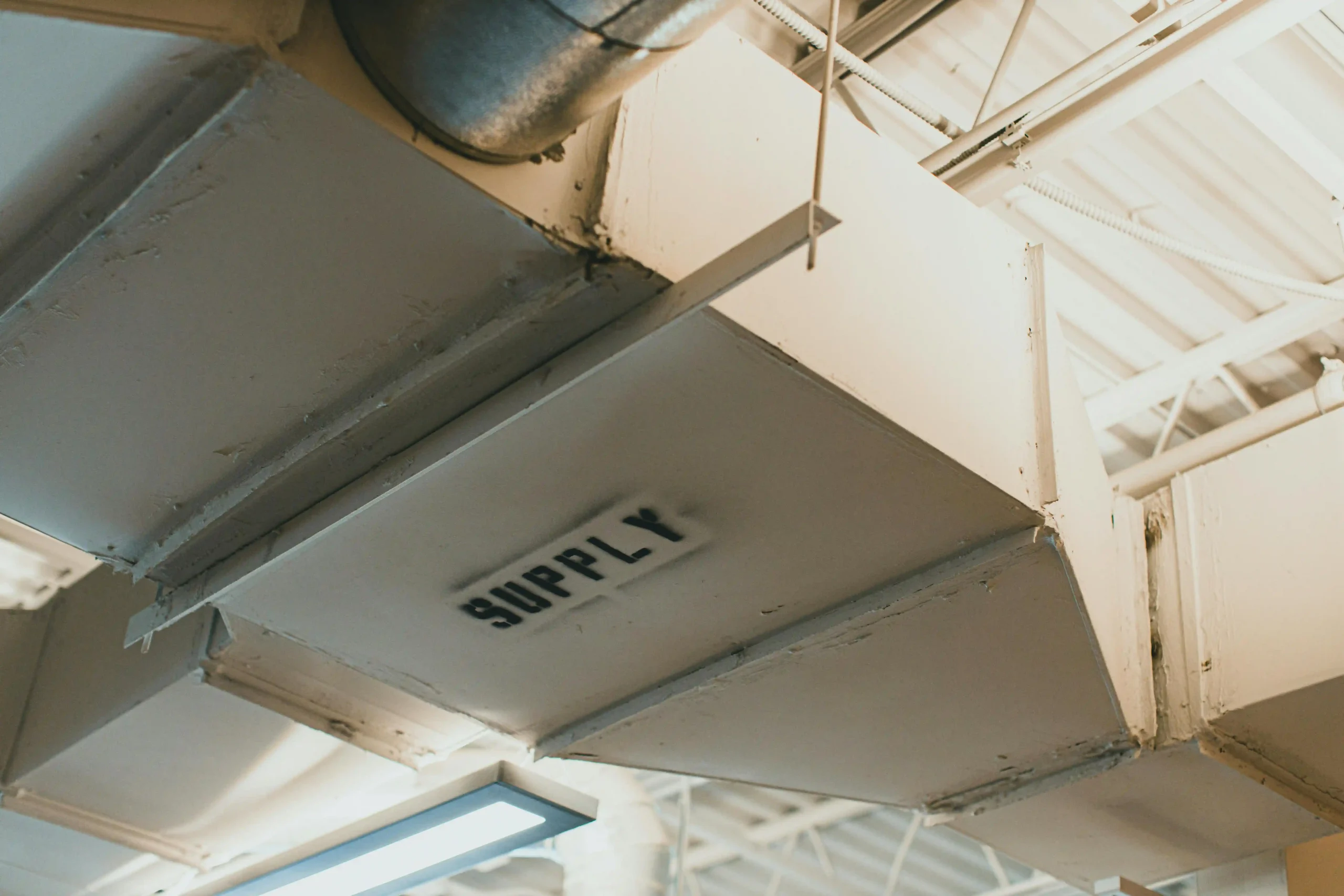

If you’ve noticed a musty smell when your HVAC kicks on, or if someone in your household has been dealing with unexplained allergy symptoms, mold in your air ducts could be the source. Air duct cleaning in Kansas City is one of the first steps homeowners take when they suspect a problem, but cleaning alone won’t fix the root cause if your ducts have leaks that invite moisture and debris in. This guide covers how mold develops in ductwork, how to identify it without tearing anything apart, and when you need more than a cleaning to stop it from coming back.
What Causes Mold to Grow Inside Ductwork
Mold needs three things to take hold: moisture, organic material to feed on, and a surface to grow on. Your duct system can supply all three, especially in Kansas City’s humid summers and wet shoulder seasons.
Here is how that combination usually develops:
- Humidity infiltration through leaky ducts: When ducts run through unconditioned spaces like attics, crawlspaces, or unfinished basements, leaks pull in warm, humid outdoor air during summer. That moisture hits the cooler duct surface and condenses. Over time, the condensation keeps surfaces damp enough for mold to establish.
- Dust and organic debris accumulation: Dust contains skin cells, pollen, and other organic particles that serve as a food source for mold spores. Every home has spores circulating in the air. Once they land on a damp, organic-coated surface inside your ducts, they grow.
- Poor drainage around the air handler: A condensate drain that backs up or overflows can push moisture directly into the air handler and into adjacent duct sections.
- Oversized HVAC equipment: Systems that are too large for the home short-cycle, which means they cool the air quickly but don’t run long enough to dehumidify effectively. The result is a home that feels cool but stays humid — and humid ducts.
Kansas City’s climate makes this more common than in drier parts of the country. Summers routinely push into the high 80s with significant humidity, which creates the conditions that make duct leakage a moisture problem and not just an energy problem.
Signs of Mold in Your Ductwork: What to Look For
You don’t need to pull apart your HVAC system to spot the warning signs. The following indicators should prompt a professional inspection:
- A persistent musty or earthy smell that gets stronger when the HVAC runs
- Visible dark spots or discoloration on vent covers or register faces
- Worsening allergy or asthma symptoms indoors, especially in certain rooms or right after the system turns on
- Condensation on the outside of supply vents or registers
- A history of water intrusion near your air handler or crawlspace ducts
- Ducts that have never been cleaned in a home over 10 years old
Visible growth on register covers does not always mean the ducts themselves are heavily colonized, but it is a reliable signal that conditions inside are favorable for growth. At minimum, it warrants a thorough inspection before you decide what to do next.
Professional duct inspectors use camera equipment to look inside flex duct runs and metal trunk lines without disassembly. This is the right first step for any homeowner who sees surface signs or has an unexplained smell.
When Duct Cleaning Is Enough — and When It Isn’t
Professional air duct cleaning removes accumulated dust, debris, and surface mold from accessible duct surfaces. Done correctly — following NADCA (National Air Duct Cleaners Association) standards — it uses negative air pressure equipment and contact cleaning to extract material rather than just blowing it further into the system.
Cleaning is the right response when:
- The mold presence is limited and recent, without deep penetration into flex duct lining
- The moisture source has already been corrected (the condensate drain is fixed, the crawlspace has been encapsulated, etc.)
- The contamination is primarily dust and organic debris without active mold colonization
Cleaning is not enough when:
- The ducts have active leaks that continue to bring in humid air from unconditioned spaces
- The mold has penetrated flexible duct liner material, which cannot be cleaned to an acceptable level
- The air handler itself is contaminated at the coil or drain pan
- The root moisture source has not been addressed
This is the distinction most homeowners miss. Cleaning a duct system that still leaks humid outside air is like mopping a floor with a leaking pipe overhead. The contamination will return within one or two seasons. The EPA’s guidance on duct cleaning makes this point explicitly: if the underlying moisture problem isn’t resolved, surface cleaning provides only temporary relief.
How Leaky Ducts Create the Moisture Pathway
Most Kansas City homes with duct systems lose between 20 and 40 percent of conditioned air through leaks at joints, seams, and connections. Those same gaps that let conditioned air out also let unconditioned air in, particularly in systems with ductwork in attics or crawlspaces.
During a Kansas City summer, crawlspace air at 80 degrees and 70 percent relative humidity entering a duct carrying 55-degree supply air will condense on contact. Do this repeatedly over a season and you create a wet zone inside the duct that never fully dries between cycles.
Sealing the ducts eliminates the infiltration pathway. When the duct system is airtight, outside air cannot enter, condensation stops, and the conditions that support mold growth are removed. This is why mold remediation professionals increasingly recommend duct sealing as a follow-up to duct cleaning when leakage is a contributing factor.
Our Aeroseal duct sealing service pressurizes the entire system and seals leaks at inaccessible internal joints where manual methods can’t reach. The result is a computer-verified seal with documented before-and-after leakage data. For homeowners dealing with recurring mold problems, the combination of professional cleaning followed by Aeroseal sealing addresses both the current contamination and the pathway that caused it.
What to Do If You Find Mold in Your Ducts
Once you’ve confirmed or strongly suspect mold, here is the recommended sequence:
- Stop running the system. If active mold is confirmed, running the HVAC will spread spores through every room connected to the duct system. Pause the system if conditions allow.
- Get a professional inspection. Camera inspection identifies the extent of the problem. This determines whether cleaning is adequate or whether sections of ductwork need replacement.
- Address moisture sources first. Before any cleaning, identify and correct the source. Check the condensate drain, inspect crawlspace humidity levels, and test duct leakage if there is any suspicion of infiltration.
- Complete professional duct cleaning. Use a contractor who follows NADCA standards, uses negative pressure equipment, and can show before-and-after photos. Do not accept a “blow and go” service that uses only blowers without contact cleaning or a vacuum system.
- Seal the ducts if leakage testing reveals significant air loss. If leakage is high, Aeroseal sealing closes the infiltration pathways and reduces the probability of recurrence.
- Replace lined flex duct sections where mold has penetrated the lining. No cleaning method recovers contaminated flex duct liner to a reliable standard. Affected sections should be cut out and replaced, then sealed at the new joints.
You can also review our duct repair services if you suspect damaged or deteriorated duct sections that need replacement before cleaning and sealing can be effective.
Choosing the Right Contractor in Kansas City
The Kansas City area has no shortage of companies offering duct cleaning, but standards vary widely. A legitimate contractor for mold-related duct work should be able to:
- Show current NADCA certification or affiliation
- Describe the specific vacuum and contact cleaning process they use
- Offer camera inspection before quoting
- Identify whether the air handler coil and drain pan are included in the service
- Provide a written report of findings
Avoid any contractor who quotes a flat fee without inspecting the system first, who guarantees “mold removal” without addressing moisture sources, or who cannot explain their equipment or process in specific terms. In the Kansas City market, $49 to $99 whole-house duct cleaning offers are almost universally low-quality jobs that blow material further into the system rather than extracting it.
Green Seal Energy serves the full Kansas City metro, including Overland Park, Olathe, Lee’s Summit, Shawnee, Lenexa, and surrounding areas. We combine professional cleaning with comprehensive leakage assessment so that the problem you’re paying to fix doesn’t return in the next humid season.
Frequently Asked Questions About Mold in Kansas City Ductwork
Can mold in air ducts make you sick?
Yes. Mold spores circulating through an HVAC system are distributed to every room in the house. For people with allergies, asthma, or compromised immune systems, ongoing mold exposure from ductwork can cause or worsen respiratory symptoms, sinus congestion, headaches, and fatigue. Sensitive individuals often notice symptoms specifically when the system runs, which is a useful diagnostic signal.
How do I know if it’s actually mold or just dust on my vents?
Dust on registers is common and not automatically a mold concern. The key indicators of mold specifically are a musty smell that intensifies when the system runs, dark discoloration that appears fuzzy or spotty rather than uniformly gray like dust, and symptoms in household members that worsen indoors. When in doubt, a professional camera inspection can confirm whether what you’re seeing on registers corresponds to growth deeper in the system.
Will cleaning my ducts remove all the mold?
It depends on the extent. Surface mold on metal duct walls can be cleaned effectively by a professional using proper equipment. However, mold that has penetrated flexible duct lining cannot be cleaned to a safe standard — those sections need replacement. And if the moisture source causing mold hasn’t been addressed, cleaned ducts will re-contaminate within one to two seasons.
How much does duct cleaning cost in Kansas City for a mold concern?
Professional NADCA-standard duct cleaning for a typical Kansas City home runs $400 to $800, depending on home size and system complexity. If camera inspection reveals sections that need replacement, add $200 to $500 for that work. If leakage testing reveals significant duct leaks contributing to moisture infiltration, Aeroseal sealing typically adds $1,600 to $2,200 for a mid-size home, with EVERGY rebates potentially offsetting $200 to $300 of that cost.
Get a Professional Assessment for Your Kansas City Home
Mold in ductwork is a solvable problem, but the solution has to address both the contamination and the conditions that allowed it. Green Seal Energy offers air duct inspection, professional cleaning, and Aeroseal duct sealing for homes across Kansas City, Overland Park, Olathe, Lee’s Summit, and the surrounding metro. Call us at (816) 200-0129 or schedule online to set up a camera inspection and find out what’s actually going on in your duct system.