There is a reason so many Kansas City homeowners with older houses deal with uneven temperatures, high utility bills, and HVAC systems that run constantly without keeping up. If your home was built before 2000, the odds are very high that your ducts are leaking. This is not a criticism of how those homes were built. It reflects the materials that were standard at the time, the installation practices that were common, and the simple reality that most duct systems were never designed to last more than 20 to 25 years. Duct sealing Kansas City homeowners in pre-2000 homes need is not optional maintenance. For most of these houses, it is one of the most impactful efficiency upgrades available.
What Building Codes Looked Like Before 2000 in Kansas City
To understand why older Kansas City homes almost always have leaky ducts, it helps to understand what the construction standards were at the time they were built.
Prior to the widespread adoption of modern energy codes in the early 2000s, duct sealing requirements in residential construction were minimal or nonexistent. Builders were not required to verify duct tightness. There were no mandatory blower door tests. Duct systems were installed and inspected visually, which meant that joints sealed with duct tape or light mastic were considered adequate.
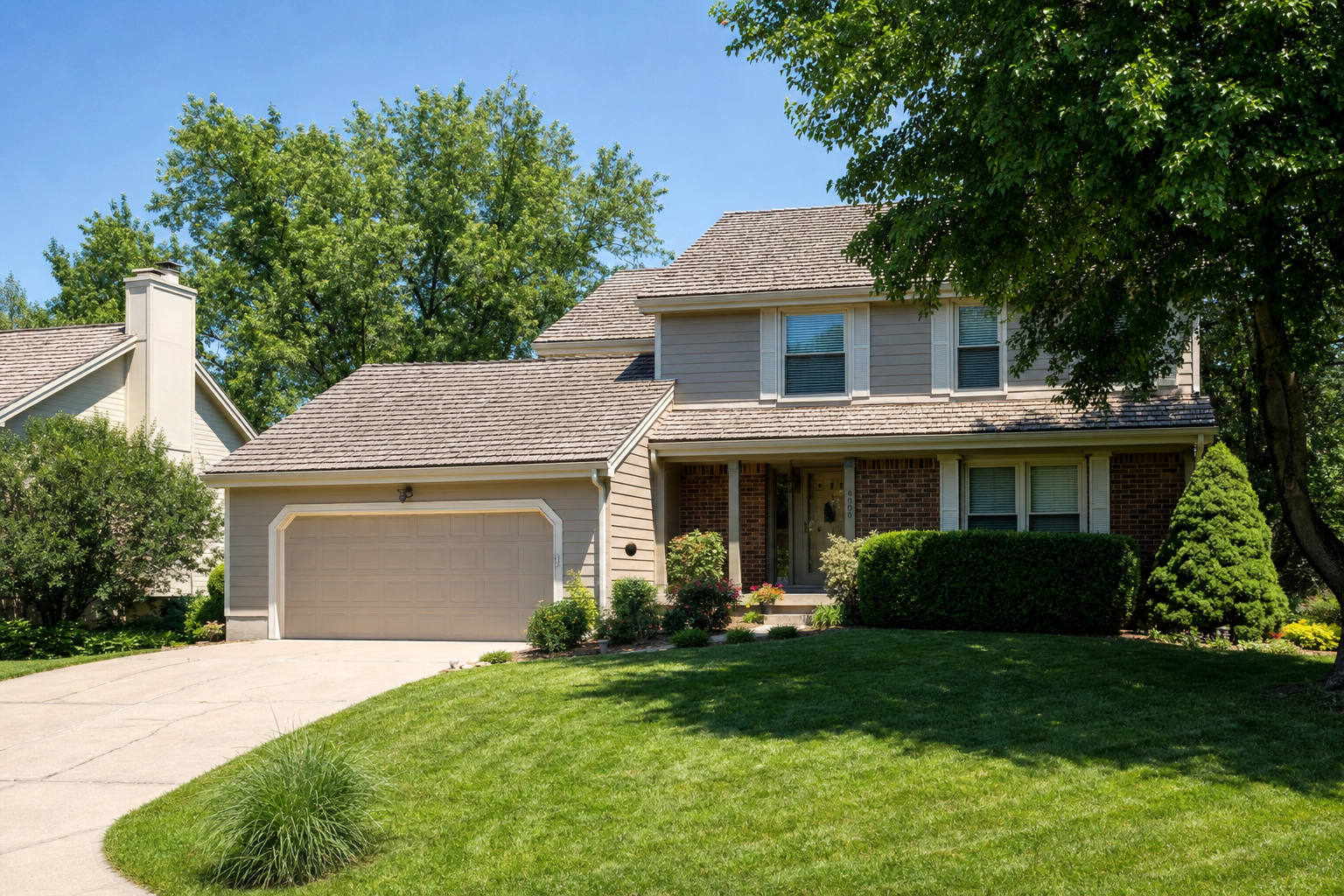
Kansas City adopted more rigorous energy codes progressively through the 2000s and 2010s, aligned with the International Energy Conservation Code (IECC) updates. But homes built before those codes took effect were grandfathered in. The duct system in a 1985 ranch house in Overland Park or a 1993 colonial in Lee’s Summit was installed to a standard that is now understood to be far below what is needed for efficient performance.
According to the U.S. Department of Energy, the average home loses 20 to 30 percent of conditioned air through duct leaks. In pre-2000 homes, that figure is often higher.
The Flex Duct Problem: Why 1980s and 1990s Construction Ages Poorly
Flexible duct became the dominant residential duct material during the 1980s and 1990s building boom across the Kansas City metro. It was inexpensive, easy to install, and flexible enough to route around framing without custom fabrication. But flex duct has a fundamental weakness: its connections to metal boots, junction boxes, and plenums rely on mechanical fasteners and duct tape that simply do not hold up over decades of thermal expansion and contraction.
Every Kansas City summer puts your attic ductwork through temperatures that can reach 130 to 140 degrees Fahrenheit. Every winter, those same spaces drop below freezing on cold nights. That cycling stresses every connection point. After 25 or 30 years of thermal cycling, duct tape connections are almost always compromised. Many are completely failed.
The inner liner of older flex duct also degrades. The mylar film that forms the air barrier inside flex duct becomes brittle with age. Small cracks and tears develop, especially at bends and connection points. These are not visible from the outside of the duct and would not be found by any visual inspection.
Homes in Overland Park, Shawnee, Lenexa, and other Johnson County communities built during the 1980s and 1990s growth periods are especially concentrated in this age range. If your home falls into that category, the probability that your flex duct connections are leaking is very high.
Sheet Metal Ducts and Duct Tape: A 20-Year Time Bomb
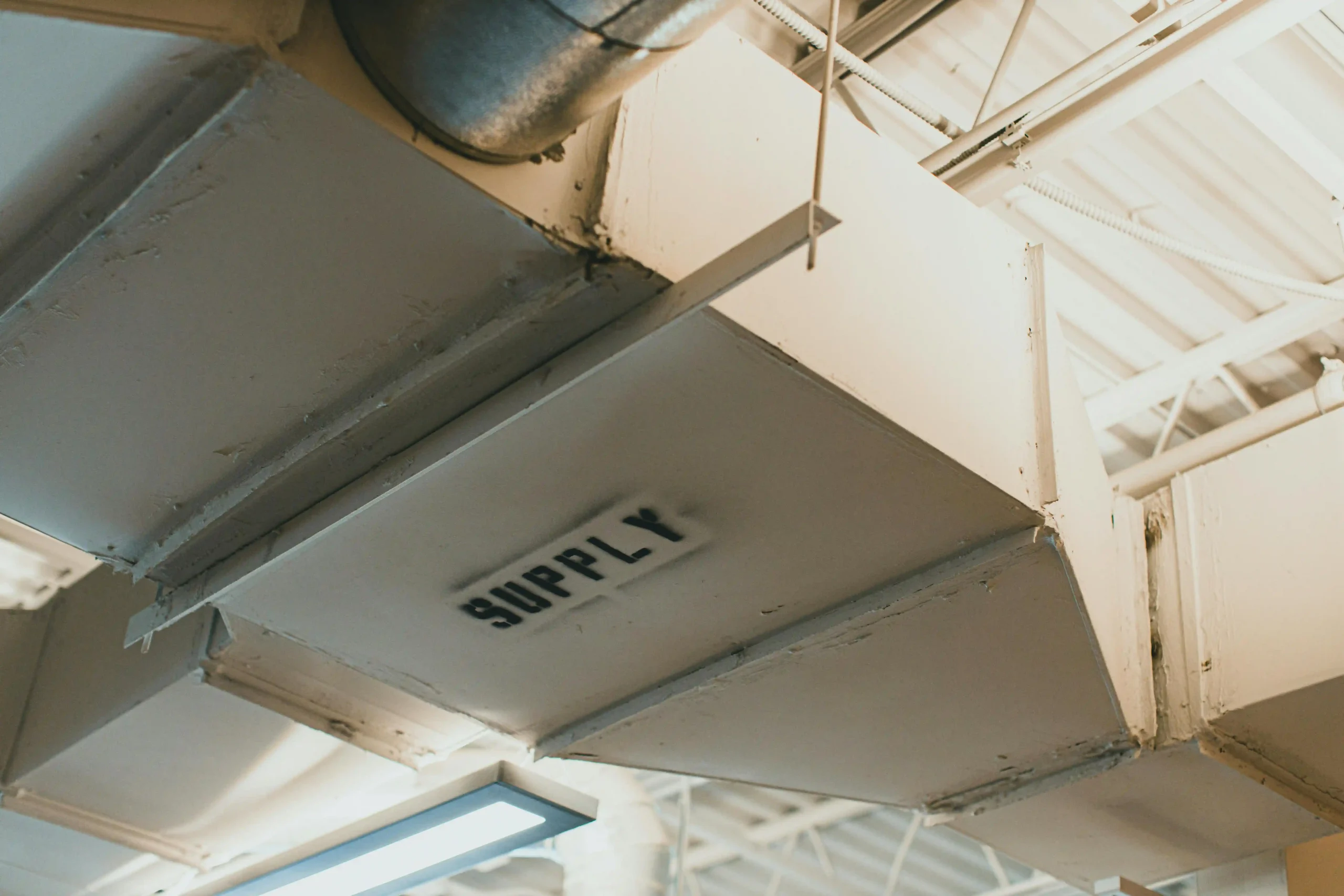
Kansas City homes built in the 1960s and 1970s more commonly used rigid sheet metal ductwork. This material is more durable than flex duct in some ways, but it carries its own aging problem: the joints between sections were almost universally sealed with cloth-backed duct tape.
Duct tape has a well-documented failure window. The adhesive on cloth duct tape begins to degrade within 5 to 10 years when exposed to the heat of an attic or the temperature swings of a crawlspace. Within 15 to 20 years, it has typically lost most of its adhesion. The tape may still be physically present, but it is no longer sealing anything.
A sheet metal duct system with failed tape joints can leak at every seam throughout the entire run, from the air handler to the farthest register. Homes in Kansas City MO neighborhoods like Waldo, Brookside, and Westwood, where a significant portion of housing stock dates from the 1950s through the 1970s, are particularly affected by this issue.
Our Aeroseal duct sealing process handles both flex duct and sheet metal systems. Because it works from the inside of the pressurized duct system, it seals every joint regardless of whether that joint is accessible from the outside.
The Moisture and Mold Risk in Older Kansas City Ductwork
Kansas City has a humid climate. Summers bring sustained humidity that challenges building systems in ways that drier climates do not. For pre-2000 homes with leaky ducts, that humidity creates a secondary problem beyond energy loss: moisture infiltration.
When a leaky duct system pulls return air from an unconditioned crawlspace or attic, it is drawing in humid, unconditioned air. That humid air passes through the system and, during cooling season, hits cold duct surfaces. Condensation forms. Over time, that moisture promotes mold growth on duct insulation, on duct board liners, and on the surfaces of plenums and air handlers.
Homeowners in older Kansas City homes sometimes notice musty odors when the HVAC system runs. That smell often traces back to mold growth in a duct system that has been pulling in attic or crawlspace air for years. Sealing the leaks stops the moisture pathway and addresses the source of the problem.
Why Aeroseal Is Particularly Well Suited for Pre-2000 Kansas City Homes
Manual duct sealing, applying mastic or tape to accessible joints by hand, was the standard approach before Aeroseal technology became available. But in a pre-2000 Kansas City home, manual sealing has serious limitations. Many of the worst leaks are at joints inside wall cavities, above finished ceilings, or in the deep recesses of attic duct runs where no technician can comfortably work.
Aeroseal solves this problem by working from the inside. The pressurized sealant mist travels to every leak regardless of where it is in the system. Green Seal Energy’s residential duct sealing service includes a full before-and-after leakage test so you can see exactly what your system leaked before the treatment and what it leaks after.
For most pre-2000 Kansas City homes, the results are dramatic. Leakage rates that started at 25 to 40 percent drop to 3 to 8 percent after a single Aeroseal treatment. Homeowners in Overland Park, Olathe, and Lee’s Summit report noticeably more even temperatures throughout the house and measurably lower utility bills within the first billing cycle.
Call Green Seal Energy at (816) 200-0129 to schedule a duct leakage evaluation for your older Kansas City home.
FAQ: Leaky Ducts in Pre-2000 Kansas City Homes
How do I know if my older Kansas City home has leaky ducts?
The most reliable indicators are uneven temperatures between rooms, utility bills that seem high for your home’s size, dust accumulation on surfaces and registers, and an HVAC system that runs longer than it should. A professional duct pressure test is the only way to get an accurate measurement of how much air your system is actually losing.
Is it worth sealing the ducts in a home I plan to sell in a few years?
Yes. Homes with documented low duct leakage rates and verified energy efficiency improvements are increasingly attractive to buyers in the Kansas City market. A written Aeroseal certificate showing before-and-after leakage numbers is a tangible asset in a home sale.
Will sealing my ducts make a noticeable difference in my utility bills?
Most homeowners in pre-2000 Kansas City homes see measurable reductions in heating and cooling costs within the first billing cycle after Aeroseal treatment. The size of the reduction depends on how severe the leakage was before sealing, but reductions of 15 to 25 percent in HVAC-related energy use are common.
Does Green Seal Energy work in older Kansas City neighborhoods like Waldo, Brookside, or Prairie Village?
Yes. Green Seal Energy serves Kansas City MO and KS, Overland Park, Prairie Village, Shawnee, Olathe, Lee’s Summit, Blue Springs, Liberty, Independence, and the full surrounding metro. Call (816) 200-0129 to schedule.
Do Not Let Old Ductwork Drain Your Budget Any Longer
If your Kansas City home was built before 2000, your duct system has almost certainly been leaking for years. The technology to fix it efficiently and verifiably exists today. Green Seal Energy brings Kansas City’s only Elite Aeroseal certification and a track record of results across hundreds of homes in the metro area.
Call Green Seal Energy at (816) 200-0129 or schedule online to book a duct leakage evaluation for your home.