When your energy bills are higher than they should be and your home never quite reaches the temperature on the thermostat, the instinct is usually to call an HVAC company for a tune-up. A tune-up is a reasonable starting point, but it only addresses the equipment — not the building systems that determine how efficiently that equipment actually performs. HVAC efficiency services in Kansas City cover a much broader range of work than most homeowners realize, and not all of them deliver the same return. This guide breaks down what each service includes, what it costs, how quickly it pays back, and which ones are worth prioritizing for a Kansas City home.
The Full Menu of HVAC Efficiency Services
Most contractors specialize in one or two services and position those as the solution to every efficiency problem. Understanding the full range helps you decide what your home actually needs rather than defaulting to whatever your last contractor recommended.
Furnace and AC Tune-Up
A professional tune-up covers mechanical inspection of the heating or cooling equipment: checking the heat exchanger for cracks, testing igniter function, measuring refrigerant charge, cleaning coils, and verifying electrical connections and safety controls. A good tune-up prevents unexpected breakdowns and keeps equipment running at its rated efficiency.
Typical cost: $80 to $200 per unit
Impact on energy bills: Moderate. A neglected furnace operating at 85 percent of rated efficiency can return to its 96 percent rating after a tune-up. That’s meaningful, but a 96-percent-efficient furnace still wastes 30 percent of output if ducts leak heavily.
Payback period: Often one to two seasons through avoided repairs and modest efficiency gains.
Bottom line: Worth doing annually. Not a substitute for addressing duct leakage or air sealing.
Duct Cleaning
Professional air duct cleaning removes dust, debris, and surface contamination from duct walls and components using negative pressure equipment and contact cleaning methods. NADCA-certified cleaning covers supply and return lines, the air handler coil, blower, and drain pan.
Typical cost: $400 to $800 for a full system in a Kansas City home
Impact on energy bills: Limited for energy purposes alone unless debris is significant enough to restrict airflow. Primary benefit is air quality and allergy reduction.
Payback period: Not typically calculated in energy terms; value is in air quality and system longevity.
Bottom line: Recommended every three to seven years depending on pets, allergies, or visible contamination. Required before Aeroseal sealing if debris buildup is present.
Duct Sealing
Aeroseal duct sealing addresses one of the highest-impact efficiency problems in residential buildings: air loss through duct leaks. The process pressurizes the duct system and injects a polymer sealant that travels through the airstream and bonds to the edges of any gap it encounters — including joints inside walls and floors that can’t be reached by hand.
Typical cost: $1,600 to $2,200 for a mid-size Kansas City home (before EVERGY rebates)
Net cost after EVERGY rebates: $1,300 to $1,900 for qualifying projects
Impact on energy bills: High. The DOE estimates duct leakage accounts for 20 to 30 percent of heating and cooling energy loss. Sealing can recover $300 to $600 per year in a typical Kansas City home.
Payback period: 3 to 5 years after rebates, then pure savings for the life of the system.
Bottom line: The single highest-ROI efficiency service for homes with duct leakage above 15 percent. Green Seal Energy is the only Elite Aeroseal dealer in Kansas City and EVERGY’s number one certified rebate partner.
Air Sealing (Envelope)
Envelope air sealing addresses infiltration through the building shell — gaps around recessed lights, top plates, rim joists, plumbing penetrations, and attic hatches. This is separate from duct sealing and addresses a different type of air loss: outside air leaking directly into living spaces rather than air escaping duct joints.
Typical cost: $500 to $1,500 for manual air sealing; AeroBarrier for whole-home envelope sealing ranges from $1,500 to $3,500 depending on home size and target leakage rate
Impact on energy bills: High in leaky older homes. Reduces both heating and cooling load and improves comfort near exterior walls.
Payback period: 3 to 7 years depending on current leakage rate and local climate.
Bottom line: Recommended for homes that fail blower door testing or have drafts near outlets, windows, and exterior walls. Often paired with duct sealing for maximum impact.
Duct Insulation
Ducts in unconditioned spaces — attics, crawlspaces, garages — lose heat in winter and gain heat in summer simply through the temperature difference between the duct surface and the surrounding space. Duct insulation wraps the duct exterior to reduce that thermal exchange.
Typical cost: $1 to $3 per linear foot installed; $600 to $1,500 for an average home
Impact on energy bills: Moderate to high for homes with significant unconditioned-space duct runs.
Payback period: 4 to 8 years depending on duct location and local climate.
Bottom line: Often worth combining with duct sealing since both address losses in unconditioned spaces. See our duct insulation and repair services for detail on what that work includes.
What a Diagnose-First Approach Looks Like
Most HVAC tune-up vendors send a technician to service your equipment and upsell additional services based on what they find — or what generates the best margin. The problem with that model is that it starts with a solution (their services) rather than a diagnosis of your specific losses.
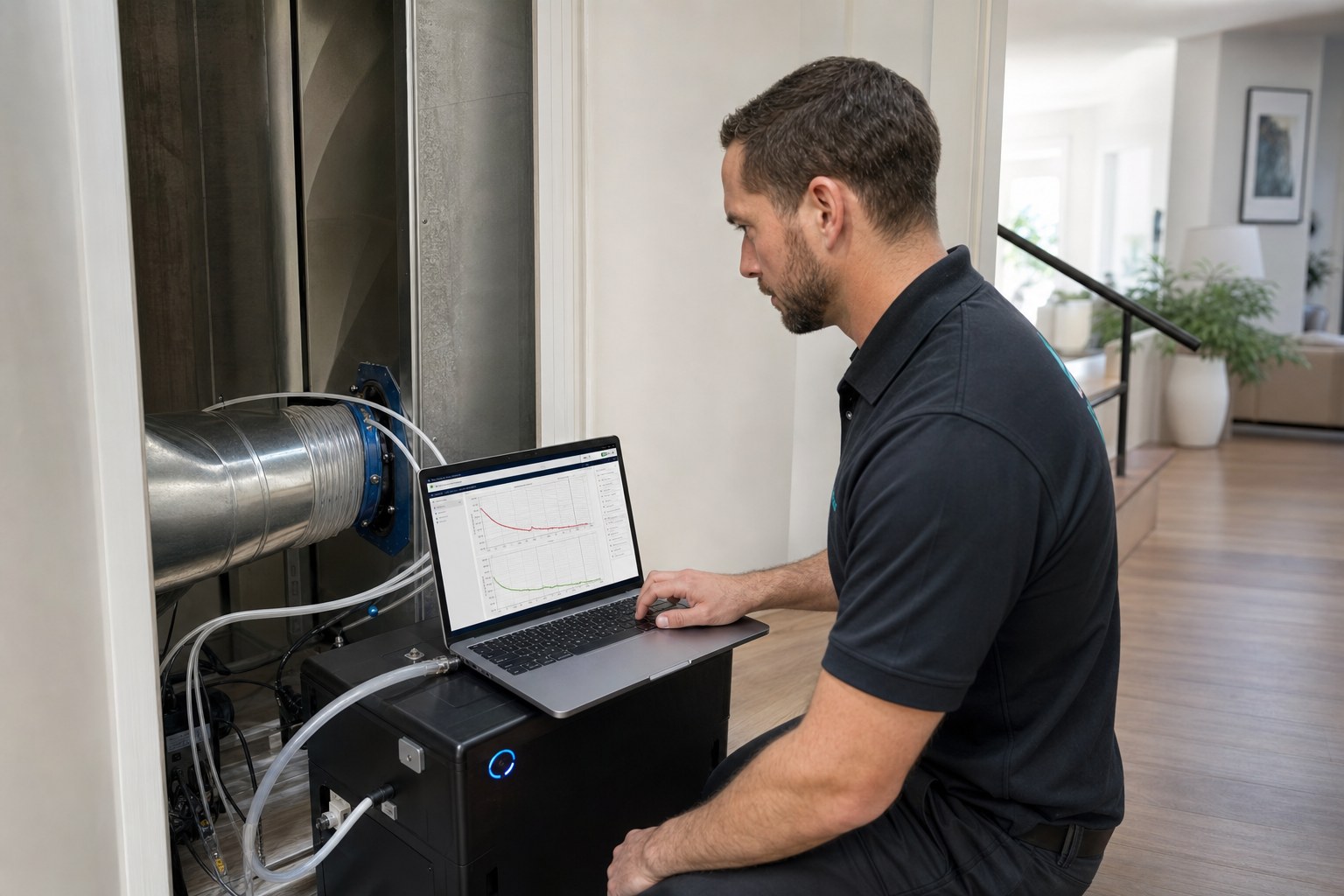
The right starting point is measurement. A duct leakage test tells you exactly how much air your duct system is losing and whether the primary losses are to conditioned or unconditioned space. A blower door test tells you how much air the building shell is losing. Together, they tell you where your energy dollars are actually going — which may or may not align with what any given contractor recommends.
Green Seal Energy starts every efficiency project with diagnostic testing. That means you get a recommendation based on your home’s actual numbers, not a standard upsell sequence. For Kansas City homeowners who’ve been told they “just need a new system” or who’ve had repeated tune-ups without seeing improvement in comfort or bills, the diagnostic step almost always reveals the real source of the problem.
Comparing Services by Cost, Impact, and Payback
Here is a consolidated comparison for a typical 1,800-square-foot Kansas City home:
| Service | Typical Cost | Annual Energy Impact | Payback Period |
|---|---|---|---|
| Furnace/AC tune-up | $80–$200 | Low–moderate | 1–2 seasons |
| Duct cleaning | $400–$800 | Low (air quality focus) | Not energy-driven |
| Aeroseal duct sealing | $1,300–$1,900 net | High ($300–$600/yr) | 3–5 years |
| Envelope air sealing | $500–$3,500 | High in leaky homes | 3–7 years |
| Duct insulation | $600–$1,500 | Moderate | 4–8 years |
For most Kansas City homeowners, Aeroseal duct sealing delivers the best combination of impact and payback speed. Envelope air sealing becomes the top priority for homes with unusually high blower door test results — typically older homes built before modern energy code requirements.
Which Services Are Worth It for Kansas City Homes Specifically
Kansas City’s climate presents specific challenges that affect which services deliver the most value. Summers are hot and humid, which means duct leakage in attics and crawlspaces brings in hot, moisture-laden air that both increases cooling load and contributes to condensation and mold risk. Winters are cold enough that heating costs represent a significant portion of annual utility spending.
Based on field diagnostics across the KC metro, the services that show up most consistently as high-value for this region are:
- Aeroseal duct sealing — especially for homes built before 2000, homes with duct systems in attics or crawlspaces, or any home where certain rooms are consistently harder to heat or cool than others.
- Envelope air sealing — for homes with high blower door results or noticeable drafts near outlets and exterior walls, particularly in older Kansas City neighborhoods.
- Duct insulation — as a complement to sealing for any home with uninsulated or under-insulated ducts in unconditioned spaces.
Annual tune-ups belong on the list as maintenance items, but they are not substitutes for addressing structural losses in the duct or building envelope. If you’ve had multiple tune-ups without improving comfort or bills, the problem is almost certainly not the equipment.
Frequently Asked Questions About HVAC Efficiency Services in Kansas City
How do I know which HVAC efficiency service my home actually needs?
Start with diagnostic testing: a duct leakage test and, if budget allows, a blower door test. Those two measurements tell you where your energy losses are occurring and how significant they are. A duct leakage test result above 15 percent of system airflow points to duct sealing as the priority. A high blower door number points to envelope air sealing. Green Seal Energy includes diagnostic testing as part of every efficiency project assessment.
Can I get multiple HVAC efficiency services done at once?
Yes, and combining services often reduces total cost and disruption. Duct sealing and duct insulation are commonly done together since both address losses in unconditioned spaces and the access points are the same. Duct cleaning is often completed before Aeroseal sealing if the system has significant debris buildup. Call (816) 200-0129 to discuss which combination makes sense for your home.
Does EVERGY offer rebates for all of these services?
EVERGY’s residential rebate program covers verified duct sealing and certain air sealing improvements. Tune-ups and duct cleaning typically do not qualify. Rebate amounts depend on verified performance improvements, and Green Seal Energy handles the documentation as EVERGY’s number one certified rebate partner in Kansas City. Program funding is annual, so scheduling early in the year improves your chances of rebate availability.
How long do HVAC efficiency improvements last?
Aeroseal sealant carries a 10-year warranty and typically lasts much longer under normal residential conditions. Envelope air sealing materials have similar longevity. Equipment tune-ups address annual wear and should be repeated each year. Duct cleaning intervals depend on your household — pets, renovation dust, and allergies all affect how quickly debris accumulates.
Schedule a Diagnostic and Get Real Numbers for Your Home
If you’re ready to stop guessing and start with actual data about where your home’s energy is going, Green Seal Energy can help. We serve Overland Park, Olathe, Lee’s Summit, Shawnee, Lenexa, Blue Springs, Independence, Liberty, and the full Kansas City metro. Our diagnose-first approach means no upsell pressure — just measurements, options, and a clear recommendation based on your home’s specific results. Call us at (816) 200-0129 or schedule online to get started.