Your dryer vent is one of the most overlooked fire hazards in your home. According to the National Fire Protection Association, dryers and washing machines cause roughly 15,970 home fires per year in the United States, and the leading cause is failure to clean the dryer vent. If you are a Kansas City homeowner and you cannot remember the last time your dryer vent was professionally cleaned, this post explains why that matters, what the warning signs are, and what a professional cleaning actually involves.
The Fire Risk Is Real: What the Numbers Say
The NFPA data on dryer fires is worth taking seriously. Dryer fires cause an estimated $238 million in property damage annually. The fires are not limited to older homes or cheap appliances. They happen in newer construction too, because the issue is almost never the dryer itself. It is lint.
Lint is highly flammable. It is essentially processed fiber that has been through heat cycles dozens or hundreds of times. When lint accumulates inside a dryer vent duct, the combination of heat and restricted airflow creates the conditions for ignition. The vent runs from the back of your dryer through your wall to the exterior of your home, and every foot of that run is a potential collection point.
In Kansas City, many homes have long dryer vent runs because laundry rooms are often located in the interior of the house or in a basement. Longer runs mean more surface area for lint to stick to, more bends where debris collects, and more resistance for the dryer to push against. That resistance causes the dryer to run hotter and longer, which accelerates lint buildup and wear on the machine.
The U.S. Consumer Product Safety Commission recommends having your dryer vent inspected and cleaned at least once per year. Homes with heavy dryer use, long vent runs, or pets should consider twice-yearly cleaning.
Warning Signs Your Dryer Vent Needs Cleaning Now
You do not have to wait for an annual appointment if your dryer is already showing signs of a blocked vent. Here are the most common warning signs Kansas City homeowners should know:
Clothes are still damp after a full cycle. When the vent is blocked, hot moist air cannot escape the drum. The dryer runs but cannot do its job. Clothes come out warm but not fully dry, and you run another cycle, generating more heat and more lint.
The exterior of the dryer is hot to the touch during operation. A properly vented dryer exhausts heat efficiently. When the vent is restricted, heat backs up into the machine and the surrounding area. If the top or sides of your dryer feel unusually hot, airflow is compromised.
A burning smell during or after a cycle. This one should prompt immediate action. A burning smell from a dryer is often lint that has accumulated near the heating element and is beginning to scorch. Do not ignore it and run another load. Stop using the dryer and call a professional.
Drying cycles are taking longer than they used to. If a load that used to dry in 45 minutes is now taking 70 to 80 minutes, airflow restriction is the most likely cause. This is one of the easiest signs to miss because it happens gradually over months.
The flapper on your exterior vent cap is not opening during operation. Go outside while the dryer is running and check the vent cap on the exterior wall or roof. The flapper should open and you should feel warm air coming out. If it is barely moving or not moving at all, the vent is significantly blocked.
How Lint Buildup Happens (And Why It Accelerates)
Understanding how lint accumulates helps you appreciate why the problem is ongoing rather than a one-time fix. Every load of laundry sheds fiber. The lint trap catches the majority of it, but a meaningful percentage bypasses the screen and travels into the vent duct. That percentage is small per load but adds up to a significant amount of material over hundreds of cycles.
The inside surface of a dryer vent duct is not smooth. It has texture, joints, and bends that give lint microscopic handholds. Over time, a thin coating builds into a thick lining that narrows the duct diameter and slows airflow. The slower the airflow, the more lint sticks, and the cycle continues.
Certain factors accelerate the process. Flexible vinyl or foil duct, which is still present in many older Kansas City homes, has accordion ridges that collect lint much faster than smooth rigid metal duct. Long runs with multiple 90-degree elbows are also high-collection zones. If your dryer vent uses flexible duct through most of its run, your cleaning schedule should be more frequent.
What Professional Dryer Vent Cleaning Involves
A professional dryer vent cleaning is a thorough process that goes well beyond what you can accomplish by removing the lint screen and wiping the accessible area behind the dryer. Here is what a Green Seal Energy technician does on a typical Kansas City dryer vent cleaning visit.
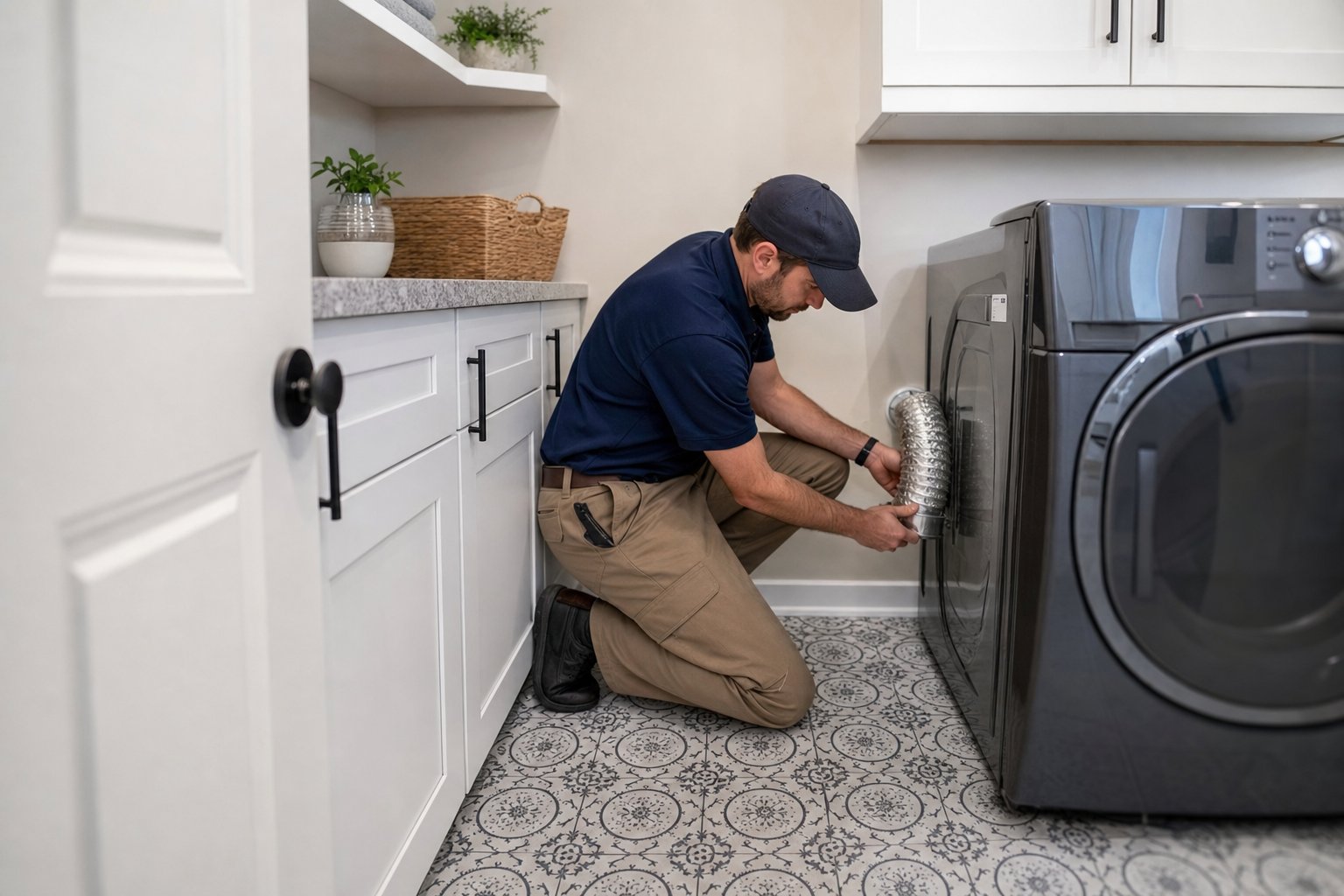
First, we disconnect the dryer and inspect the connection point between the dryer and the wall duct. This junction is often where the first major lint accumulation sits, and it is also where problems like crushed flexible duct or improper connections get identified.
Next, we run a specialized rotary brush system through the full length of the vent duct from the interior side, loosening compacted lint and debris throughout the run. We also use a high-powered vacuum to capture the loosened material as it comes through, keeping it out of your home.
We then inspect the exterior termination point to confirm the vent cap is functioning, the flapper opens freely, and there is no bird nesting or debris at the exterior opening. Bird nests in dryer vents are more common than homeowners expect, and they create a complete blockage almost immediately.
Finally, we reconnect and run the dryer to confirm proper airflow and document the results. If we identify issues like improper duct material, excessive run length, or damaged duct sections, we will walk you through repair options on the same visit.
Green Seal Energy provides dryer vent cleaning in Kansas City and throughout the metro including Overland Park, Olathe, Lee’s Summit, Shawnee, and surrounding areas. We also offer air duct cleaning if you want to address your whole system in a single appointment.
How Often Should You Clean Your Dryer Vent?
The standard recommendation is once per year for most households. But several factors can push that to twice per year or more:
- You do more than four to five loads of laundry per week
- You have pets and dry pet bedding regularly
- Your vent run is longer than 15 feet or has more than two 90-degree bends
- You use flexible duct rather than rigid metal duct
- You have noticed any of the warning signs described above
New homeowners in Kansas City who do not know the cleaning history of their dryer vent should schedule a cleaning and inspection right away. You have no way of knowing when the previous owner last had it serviced, and buying a home does not reset the lint accumulation clock.
Frequently Asked Questions About Dryer Vent Cleaning
How often should you clean a dryer vent?
Most households should clean their dryer vent once per year. Homes with heavier laundry loads, pets, or long vent runs should consider twice per year. If you notice any warning signs like longer drying times, excessive heat, or a burning smell, do not wait for the annual appointment. Call a professional immediately.
Can I clean my dryer vent myself?
You can clean the first few feet of duct behind the dryer with a brush kit from a hardware store. However, the full length of a dryer vent run, particularly bends and the section inside the wall, requires professional rotary brush equipment and a high-powered vacuum to clean thoroughly. DIY cleaning often misses the areas where lint is most compacted and where fire risk is highest.
What does dryer vent cleaning cost in Kansas City?
Professional dryer vent cleaning in Kansas City typically runs between $100 and $200 for a standard residential job. Longer runs, difficult access, or cleaning combined with a duct repair may cost more. Call Green Seal Energy at (816) 200-0129 for a precise quote based on your home’s setup.
What happens if I never clean my dryer vent?
Neglected dryer vents become increasingly restricted over time. Consequences include longer drying cycles, higher energy bills, premature dryer wear and failure, and the real risk of a dryer vent fire. The NFPA reports that most dryer fires are entirely preventable with routine maintenance. The cost of a cleaning is a fraction of the cost of a dryer replacement or fire damage claim.
Protect Your Kansas City Home: Schedule Dryer Vent Cleaning Today
A dryer vent fire is one of those disasters that feels random until you learn what causes them. Routine professional cleaning is one of the simplest things you can do to protect your home and family. Green Seal Energy serves the entire Kansas City metro, including Overland Park, Olathe, Lee’s Summit, Shawnee, Lenexa, and Blue Springs. Call Green Seal Energy at (816) 200-0129 or schedule online to book your dryer vent cleaning and inspection.