A blower door test in Kansas City gives you a precise measurement of how much air is leaking in and out of your home through gaps in the building envelope. It is one of the most useful diagnostic tools available to homeowners concerned about high energy bills, uneven temperatures, or moisture problems. This post explains exactly what a blower door test measures, what it looks like inside a real Kansas City home, what it typically costs, and how the results connect to the next logical steps, including Aeroseal duct sealing and whole-home air sealing.
What a Blower Door Test Actually Measures
A blower door test measures air infiltration through the building envelope, which includes your exterior walls, attic floor, rim joists, windows, doors, and any other barrier between conditioned living space and the outdoors. The test does not measure duct leakage specifically, though the two are related and often tested together.
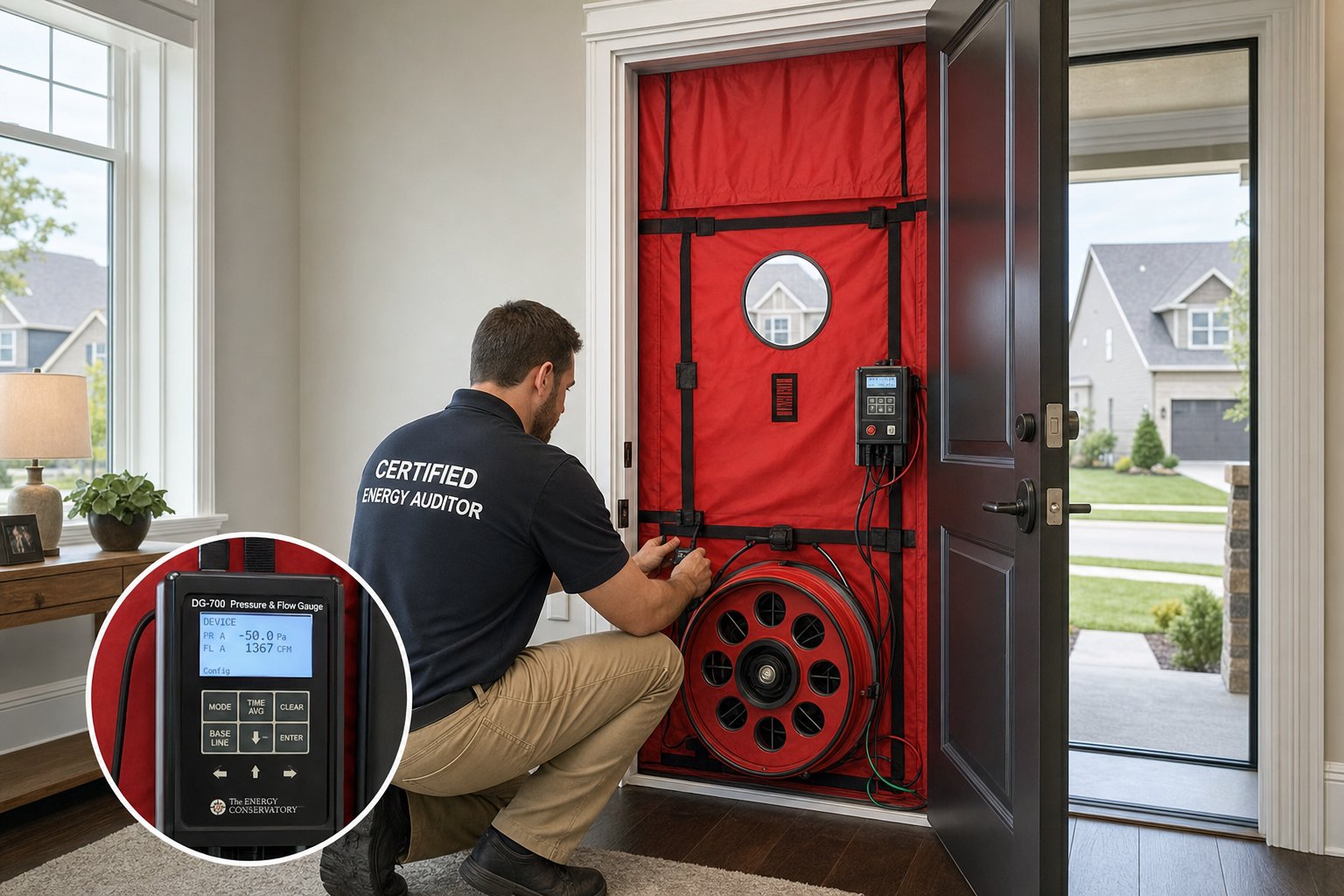
The equipment consists of a calibrated fan mounted in an exterior door frame, along with pressure gauges and software that records airflow data. The fan depressurizes the home to a standard 50 pascals below outdoor pressure. At that pressure differential, outside air rushes in through every gap, crack, and penetration in the envelope. The software measures how much airflow is needed to maintain that pressure, which tells you the total leakage rate of the home.
Results are expressed in several ways. CFM50 is the most common raw number, representing cubic feet per minute at 50 pascals. Air changes per hour at 50 pascals (ACH50) is more commonly used for comparisons between homes of different sizes. The Department of Energy recommends that modern homes achieve less than 3 ACH50. Older Kansas City homes from the 1970s and 1980s often test at 8, 10, or even 15 ACH50, meaning the entire air volume of the home is turning over with outside air 8 to 15 times per hour under test conditions.
According to the U.S. Department of Energy, air sealing can reduce heating and cooling costs by up to 20 percent, and blower door testing is the standard method for identifying where that savings potential exists.
What the Test Looks Like Inside a KC Home
If you have never seen a blower door test done, here is what to expect on the day of the appointment in your Overland Park, Olathe, Lee’s Summit, or Shawnee home.
The technician arrives with a frame and fan assembly that mounts in your front or back door. All interior doors are opened so the entire home is pressurized as a single connected space. Fireplace dampers are closed, and exhaust fans are temporarily sealed if needed. The whole setup takes about 15 minutes.
Once the fan is running at the target pressure, the technician can walk through the home with a smoke pencil or thermal camera to identify where air is moving in. Common problem areas in Kansas City homes include attic hatch seals, recessed light fixtures in ceiling planes adjacent to unconditioned space, rim joists in the basement, gaps around plumbing and electrical penetrations, and the top plates of exterior walls. In older homes, the list of leak points is typically long.
The whole test, including the diagnostic walkthrough, takes one to two hours depending on the size of the home and how thoroughly the technician investigates each area. You receive a printed or digital report showing your ACH50 number, a list of identified leak locations, and often a prioritized recommendation for which areas to address first for the highest energy impact.
Blower Door Test Cost in Kansas City
Blower door test cost in Kansas City varies based on who is performing the test and what is included. Here is a realistic breakdown:
Standalone diagnostic test only: $150 to $300. This gives you the ACH50 number and a general sense of the home’s tightness but may not include a detailed leak location walkthrough.
Full diagnostic with thermal imaging and leak identification: $300 to $500. This version includes the technician walking the home with tools to pinpoint specific air leak locations, giving you an actionable map of where to focus sealing work.
Blower door test bundled with an air sealing or duct sealing project: Often included at reduced cost or no additional charge. When Green Seal Energy performs an AeroBarrier or Aeroseal project, pre- and post-testing is part of the service. You get the data without paying separately for the diagnostic.
Some Kansas City homeowners also receive blower door tests as part of an EVERGY energy audit, which may be available at no cost for qualifying customers. Ask us when you call at (816) 200-0129 whether your home qualifies for an energy audit that includes blower door testing.
How Blower Door Results Connect to Aeroseal and Air Sealing
A blower door test is a diagnostic, not a solution. What you do with the results depends on what the test reveals. In most Kansas City homes, the results point to one or more of the following next steps.
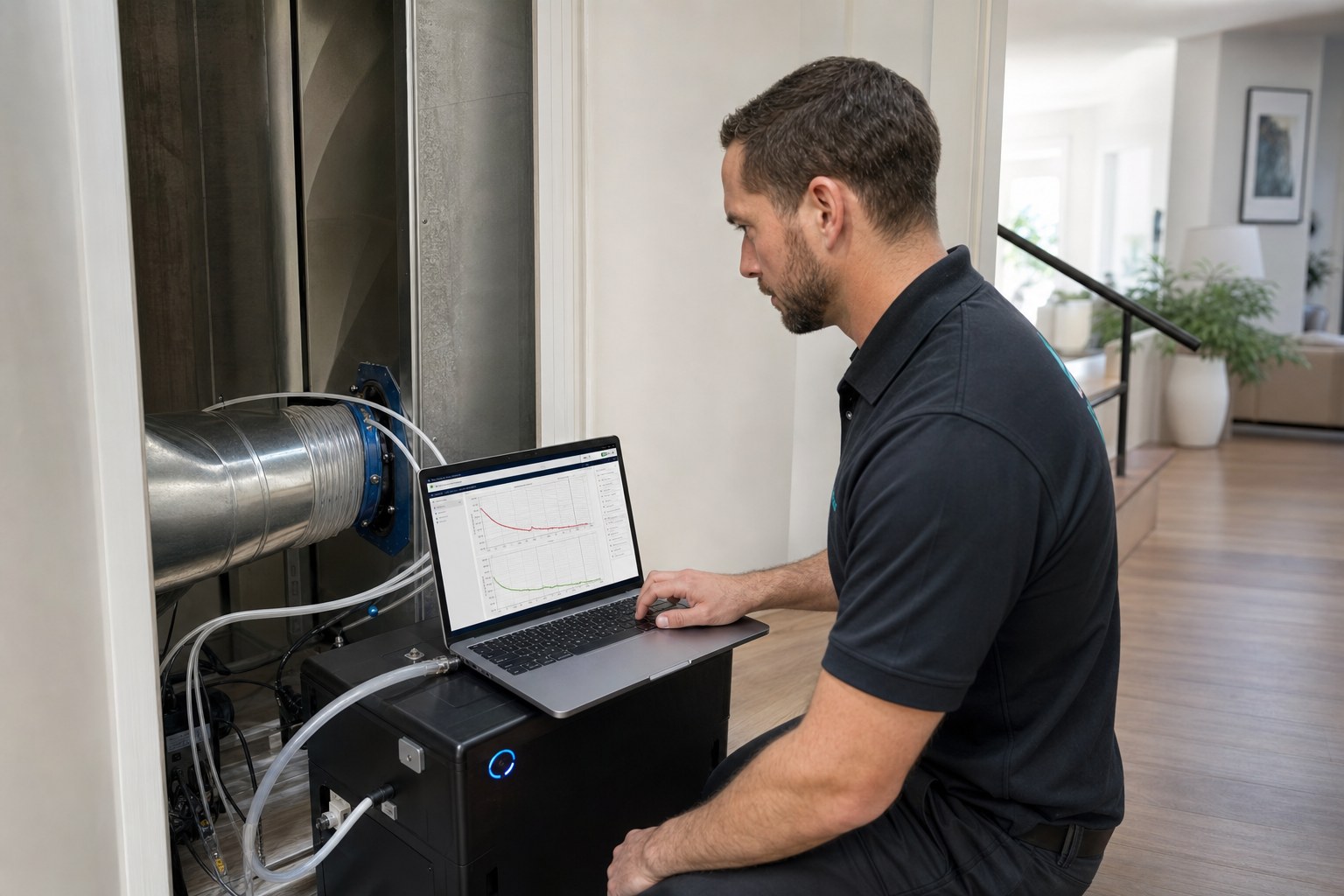
Aeroseal duct sealing is the right next step when duct leakage is a significant portion of the total air loss. Ducts that run through unconditioned spaces like attics and crawlspaces are under negative pressure when the air handler is running, meaning they pull in unconditioned air from outside the envelope. Aeroseal seals those leaks from the inside, and a duct leakage test run alongside the blower door test can separate duct losses from envelope losses. Visit our Aeroseal duct sealing service page for details on how that process works.
AeroBarrier whole-home air sealing is the right next step when the blower door reveals widespread envelope leakage that would take many hours to address manually with caulk and foam. AeroBarrier uses the same pressurization principle as the blower door test itself, injecting a water-based sealant under pressure while the home is under a blower door fan so the sealant finds and seals every gap simultaneously. Learn more on our AeroBarrier air sealing page.
Targeted manual air sealing is appropriate when the leak locations are concentrated in a few identifiable areas and the total leakage rate is moderate. A technician can address attic hatch seals, rim joists, and major penetration points with foam and caulk during a standard service visit.
The blower door test result tells you which approach makes economic sense. A home at 12 ACH50 with leaks everywhere benefits most from AeroBarrier. A home at 5 ACH50 with concentrated attic bypasses might do well with targeted manual sealing. We review the test results with you and give you a clear recommendation.
Should You Get a Blower Door Test Before Buying a KC Home?
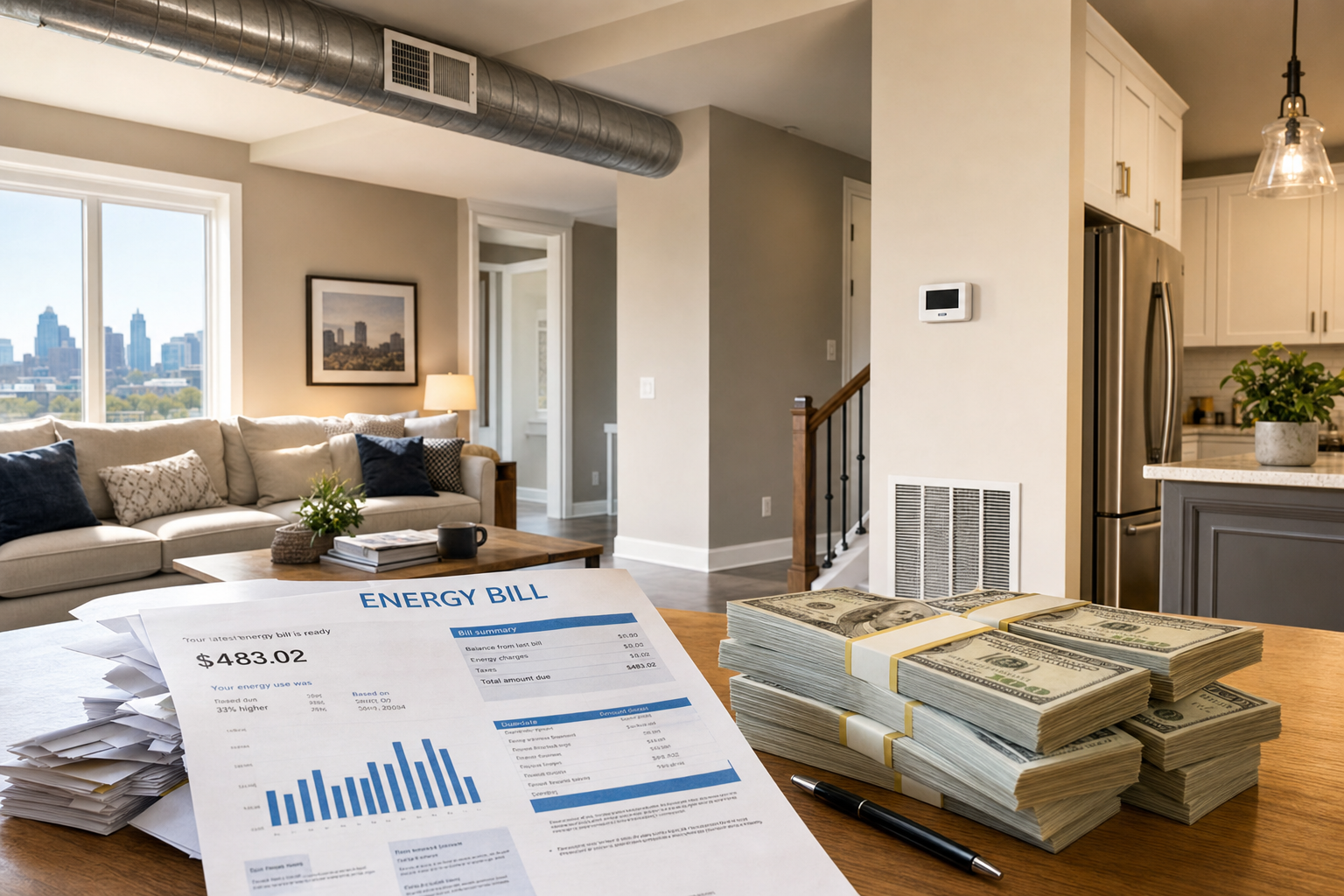
A growing number of Kansas City homebuyers are adding blower door tests to their home inspection process. A standard home inspection does not include energy testing, and a home that looks well-maintained on a visual inspection can have severe air leakage problems that translate to hundreds of dollars per year in energy waste.
For older homes in Lee’s Summit, Independence, Liberty, and Blue Springs built before 1990, a blower door test before purchase can reveal the scale of weatherization work needed and help you negotiate or budget accordingly. The $300 to $500 cost of the test is modest relative to the information it provides when making a six-figure purchase.
Our team works with buyers, sellers, and real estate agents across the Kansas City metro to schedule pre-purchase blower door tests. Call us at (816) 200-0129 to coordinate scheduling around your inspection window. We also offer full HVAC efficiency services for post-purchase energy upgrades once you are in the home.
Frequently Asked Questions About Blower Door Tests
What is a blower door test and why do I need one?
A blower door test measures how airtight your home is by using a calibrated fan to depressurize the interior and measure total air leakage. It tells you exactly how much conditioned air is escaping and where the leaks are located. You need one if you are trying to reduce energy bills, improve comfort, address moisture issues, or qualify for air sealing incentives that require pre- and post-test documentation.
How long does a blower door test take?
A blower door test with a full diagnostic walkthrough typically takes one to two hours for a standard Kansas City home. Larger homes or those with complex duct systems and many potential leak locations may take closer to two to three hours. The test itself runs for a short period; most of the time is spent identifying and documenting leak locations.
What is a good blower door test result?
The Department of Energy recommends 3 ACH50 or less for modern homes. ENERGY STAR certification requires 5 ACH50 or less in most climate zones. Kansas City falls in Climate Zone 4, and many older homes in the metro test at 8 to 15 ACH50. Any result above 5 ACH50 represents meaningful opportunity for energy savings through air sealing work.
Can a blower door test damage my home?
No. The pressure differential created by a blower door test is comparable to what your home experiences on a windy day. The equipment is calibrated to standard pressure levels and does not stress structural elements, seals, or window glazing. It is a completely non-invasive diagnostic procedure.
Book Your Kansas City Blower Door Test
Whether you are trying to understand your energy bills, planning an air sealing project, or doing due diligence on a home purchase, a blower door test is the right starting point. Green Seal Energy serves Overland Park, Olathe, Lee’s Summit, Shawnee, Lenexa, and all surrounding Kansas City communities. Call Green Seal Energy at (816) 200-0129 or schedule online to book your blower door test and get clear answers about your home’s energy efficiency.