When Kansas City homeowners decide to improve their home’s energy performance, the first question is often which to do first: air sealing or insulation. Both matter. Both save energy. But the order makes a significant difference in how much return you get from each dollar spent. Air sealing Kansas City contractors recommend as the foundation of any energy upgrade comes before insulation for one straightforward reason: insulation cannot stop air movement. Only sealing can. Green Seal Energy works with homeowners across Overland Park, Lee’s Summit, Shawnee, and the broader Kansas City metro to sequence these upgrades correctly and get the most from every improvement.
What Air Sealing and Insulation Each Actually Do
Understanding why the order matters starts with understanding what each service does. Insulation slows the transfer of heat through solid materials. A properly insulated attic floor resists heat flowing from the hot attic into your conditioned living space during summer, and resists heat flowing out of your living space into the cold attic during winter. Insulation is measured in R-value, and more R-value means better thermal resistance through solid materials.
Air sealing stops air from physically moving through gaps, cracks, and penetrations in the building assembly. Every home has hundreds of these openings: gaps around plumbing penetrations, unsealed top plates where wall framing meets the attic, recessed light fixtures that open into attic space, gaps around chimney chases, and spaces where ductwork passes through floor assemblies. These openings allow warm or cold air to move freely between conditioned and unconditioned spaces regardless of how much insulation is present.
The key distinction is that air carries heat with it. When air moves through a gap in the building envelope, it brings all of its thermal energy. Insulation slows conductive heat transfer but does nothing to stop convective heat loss through air movement. This is why a perfectly insulated but unsealed attic still loses significant amounts of energy. The insulation is working on one pathway while the air leaks bypass it entirely.
Why Air Sealing First Maximizes Your Insulation Investment
Adding insulation to an attic with significant air leakage is like putting a thick blanket over a window that is open an inch. The blanket provides some benefit, but the open gap undermines it disproportionately. Studies from the Building Science Corporation and the Department of Energy consistently show that air sealing and insulation together produce significantly better results than insulation alone, and that sealing first allows the insulation to perform closer to its rated R-value.
When you seal air leaks before installing insulation, you prevent the insulation from being degraded by airflow. Blown-in attic insulation, for example, can be disturbed and compressed over time when warm air rises through unsealed bypasses beneath it. Once air is moving through insulation rather than being stopped at the leaks below, the effective R-value drops substantially. Sealing first locks the insulation in place and ensures it performs as rated.
There is also a moisture consideration specific to Kansas City’s climate. Zone 4A experiences significant humidity swings between summer and winter. When warm, moist interior air escapes through attic bypasses and contacts cold roof deck surfaces in January, condensation forms. That moisture degrades insulation, promotes mold growth on wood framing, and can cause long-term structural damage. Sealing those air pathways before adding insulation prevents moisture-laden air from reaching cold surfaces in the first place.
AeroBarrier: Whole-Envelope Air Sealing for Kansas City Homes
Green Seal Energy offers AeroBarrier envelope air sealing, a pressurized process that simultaneously seals hundreds of small gaps throughout the building shell. Rather than hunting down and manually caulking individual penetrations, AeroBarrier pressurizes the home and circulates a fine mist of acrylic sealant. The sealant particles are drawn toward air leak points where they accumulate and seal gaps up to half an inch wide.
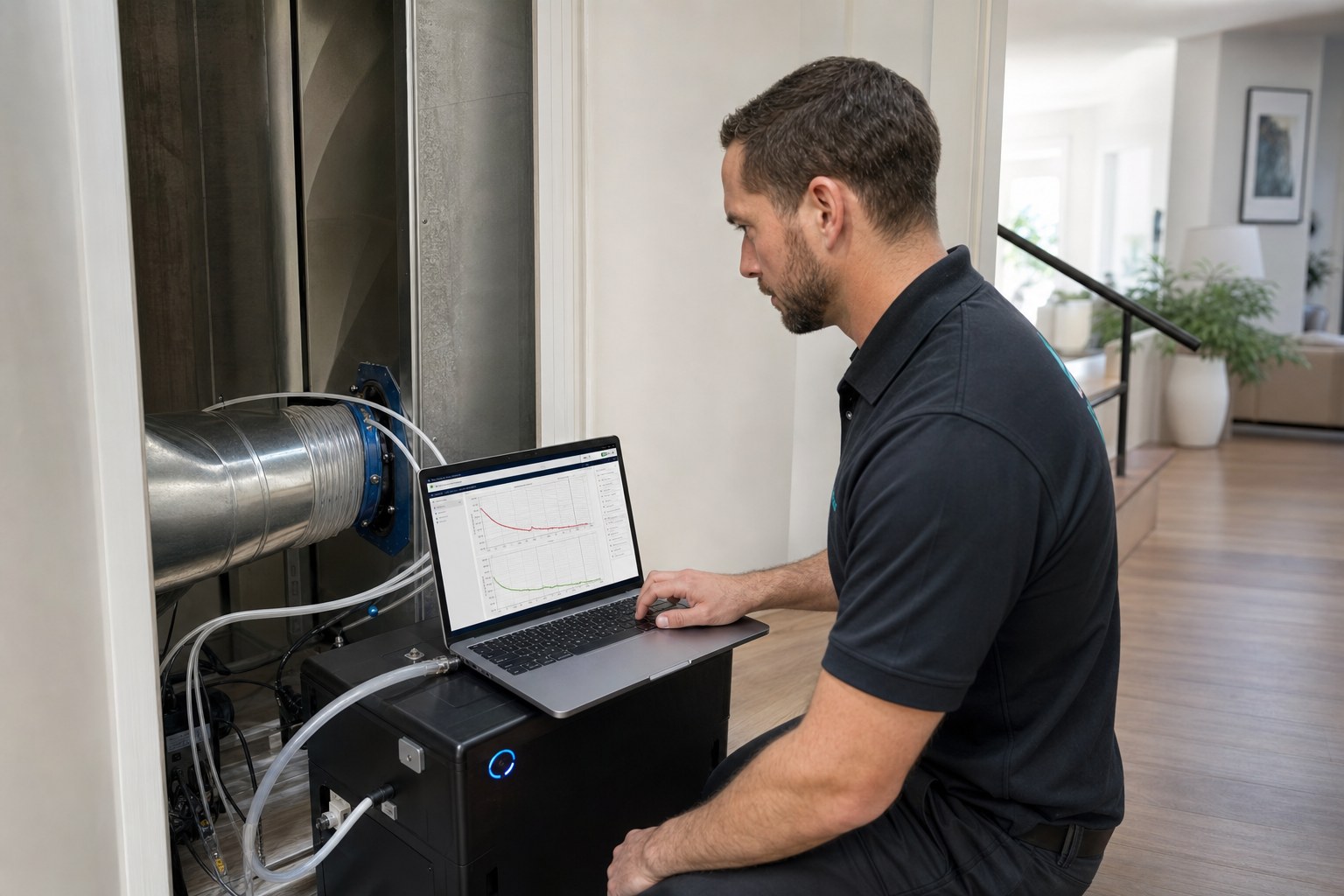
The process is measured with a blower door test before and after treatment, providing documented proof of improvement in ACH50 (air changes per hour at 50 pascals). Kansas City homeowners who have gone through AeroBarrier treatment typically see ACH50 reductions of 40 to 70 percent, depending on starting conditions. That improvement is permanent, since the acrylic sealant does not degrade over time the way caulk and spray foam in hard-to-access locations can.
After AeroBarrier treatment, adding insulation to the recommended R-values for Kansas City’s climate zone produces results much closer to what the insulation’s rated performance would predict. The two upgrades work together instead of working at partial efficiency due to bypassed air movement.
What Insulation Levels Does Kansas City Actually Need?
The IECC climate zone for Kansas City is 4A. Current code for this zone calls for attic insulation of R-49 to R-60 and wall insulation of R-13 to R-20 depending on construction type. Many older Kansas City homes, particularly those built in the 1960s through 1980s, have attic insulation levels closer to R-11 or R-19 from the original construction. That falls far short of current standards.
Adding insulation to reach R-49 or higher in a Kansas City attic is a worthwhile investment on its own. But if air sealing is skipped, the new insulation operates in a compromised environment from day one. Green Seal Energy recommends a blower door test to measure current air leakage before any insulation work proceeds, so you have a clear baseline and can make an informed decision about sequencing.
For homes planning to add both air sealing and insulation, the typical sequence is: blower door test to establish baseline, AeroBarrier or manual air sealing to address the building envelope, blower door retest to confirm results, then insulation installation. This sequence produces the best long-term energy performance and protects the new insulation investment. Our residential duct sealing service can also be layered in to address the duct system as part of a complete home performance upgrade.
The Financial Case: Comparing Returns in Kansas City
Energy modeling studies consistently show that air sealing alone in a leaky house produces energy savings of 10 to 20 percent of total heating and cooling costs. Adding insulation to a properly sealed house produces an additional 15 to 25 percent reduction. The combined improvement, done in the right order, is substantially greater than either measure alone.
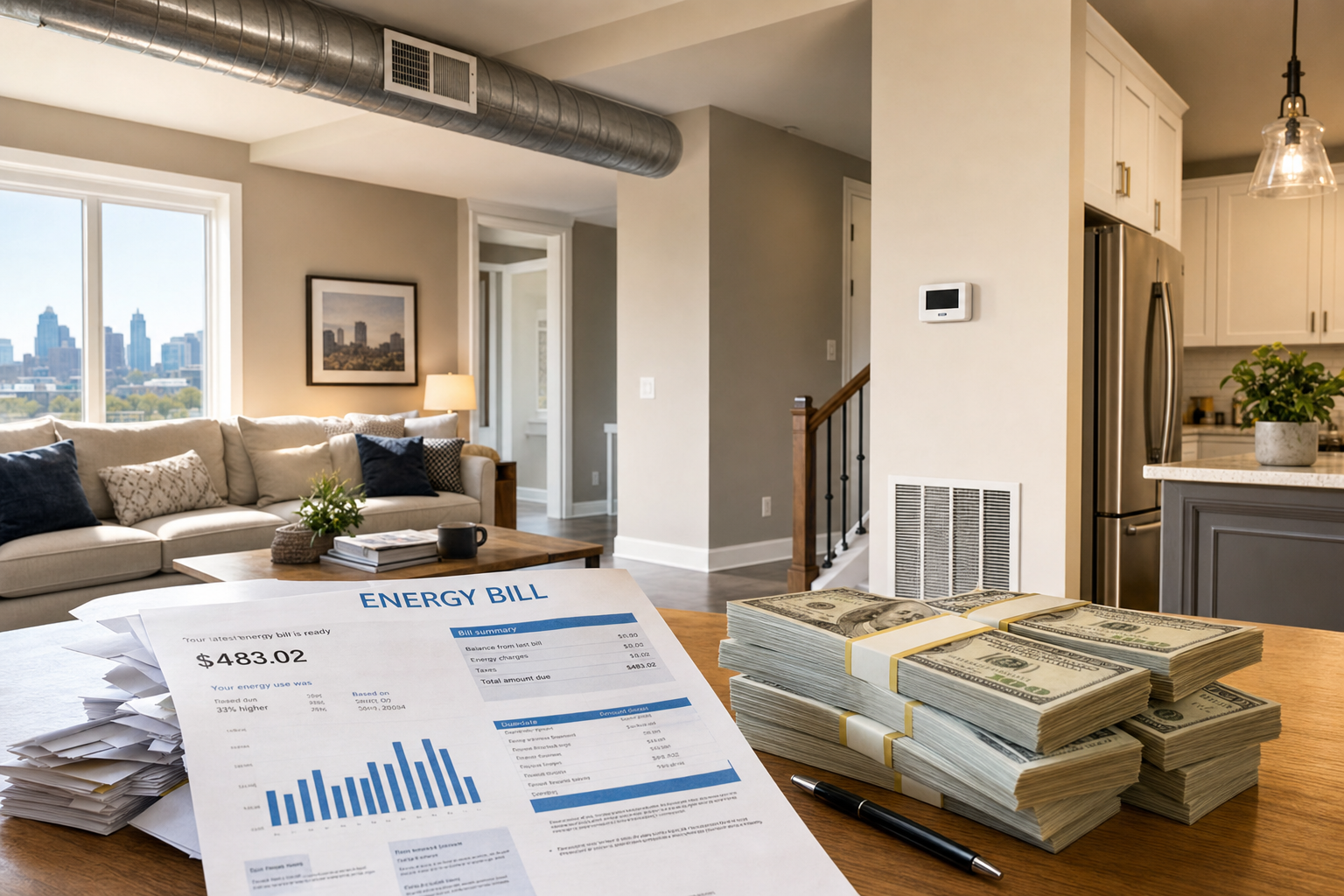
For a Kansas City home spending $2,400 per year on heating and cooling, a well-executed air sealing and insulation project could reduce that figure by $500 to $1,000 per year. Project costs vary by home size and starting conditions, but payback periods of four to seven years are common. EVERGY rebates for qualifying improvements can shorten that payback further. As EVERGY’s number one certified rebate partner in Kansas City, Green Seal Energy identifies all rebates you qualify for and manages the documentation.
Beyond the energy math, a tighter, better-insulated Kansas City home is more comfortable throughout the year. The temperature swings between rooms diminish. The HVAC system runs shorter cycles. Humidity control improves in summer. And the home holds its temperature longer during power outages, a practical benefit when Kansas City ice storms knock out power in the middle of winter.
How Green Seal Energy Sequences a Home Performance Project
When a Kansas City homeowner contacts Green Seal Energy about energy improvements, we begin with a whole-home assessment. We measure current air leakage with a blower door, inspect duct leakage with pressure testing, and assess existing insulation levels. From that data, we build a prioritized recommendation that accounts for your budget, your timeline, and the specific conditions in your home.
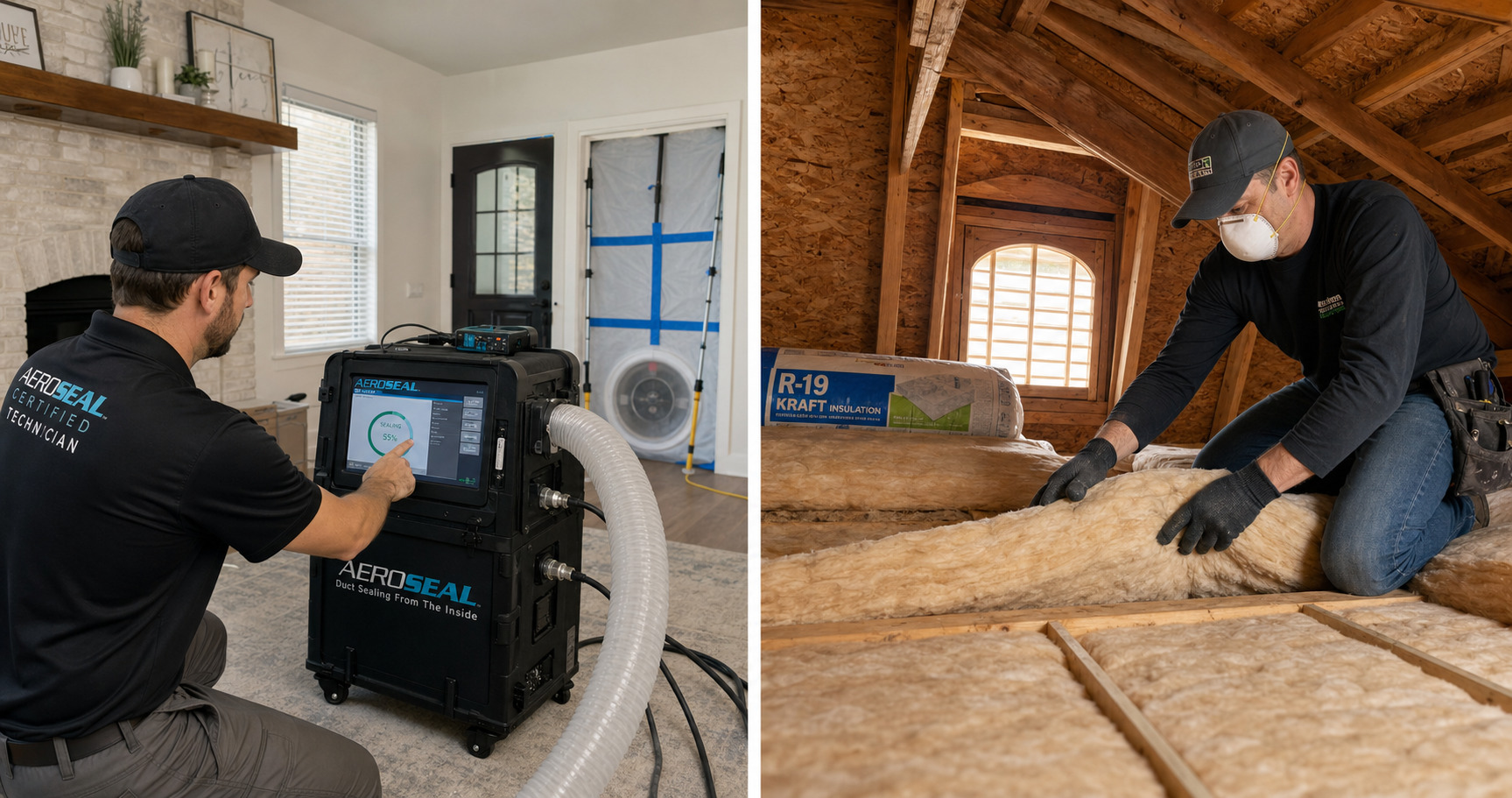
For most Kansas City homes with both air leakage and insulation deficiencies, we recommend addressing the envelope first with AeroBarrier or targeted manual air sealing, then sealing the duct system with Aeroseal if duct leakage is significant, then adding insulation. This sequence is supported by building science research and produces the most durable results. Visit our envelope air sealing page to learn more about the AeroBarrier process and what to expect.
Frequently Asked Questions
Can I just add insulation without air sealing in Kansas City?
You can, and you will see some improvement. But in a leaky Kansas City home, insulation added without sealing air bypasses will underperform its rated R-value. Air movement through attic bypasses degrades blown insulation over time and continues to carry heat out of the home in winter. Sealing first protects the insulation investment and produces better long-term results.
How do I know how leaky my home is?
A blower door test measures your home’s air leakage in ACH50. Green Seal Energy performs blower door testing as part of our home assessment process. The test takes about an hour and gives you a precise number that can be compared to code targets and used to calculate potential energy savings from air sealing.
Does AeroBarrier work in existing homes or only new construction?
AeroBarrier works in both existing homes and new construction. For existing Kansas City homes, it is particularly effective because it reaches gaps inside walls and at structural interfaces that would require major demolition to access manually. The pressurized process distributes sealant throughout the building shell from a central application point without requiring access to every individual leak location.
Will air sealing make my home too tight and cause air quality problems?
A properly sealed home does not cause air quality problems when ventilation is managed correctly. Current building science standards call for mechanical ventilation in tight homes to ensure fresh air exchange. Green Seal Energy accounts for ventilation requirements when recommending air sealing work and can advise on appropriate ventilation solutions for your Kansas City home’s specific conditions.
Make the Right Move First
Air sealing before insulation is not just a preference. It is the approach that building science supports and that Green Seal Energy has validated in hundreds of Kansas City homes. If you are planning energy upgrades, start with a whole-home assessment so you have the data to make the right decisions in the right order.
Call Green Seal Energy at (816) 200-0129 or schedule online to book your home performance assessment. We serve Kansas City, Overland Park, Olathe, Lee’s Summit, Shawnee, and all surrounding communities.