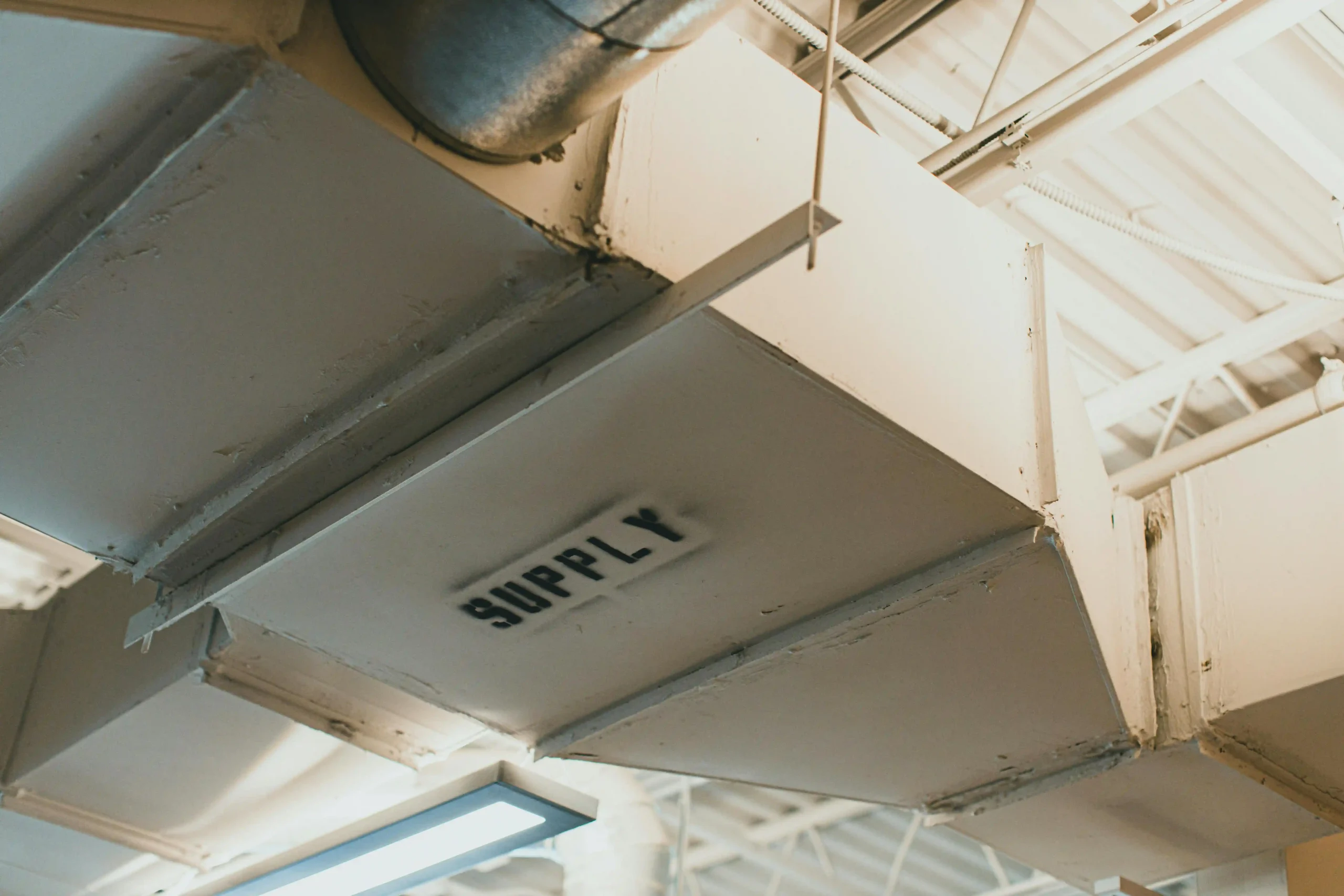

The U.S. Department of Energy estimates that the typical home loses 20 to 30 percent of its conditioned air through leaks in the duct system before that air reaches a single living space. In Kansas City, where summer temperatures regularly push past 95 degrees and winter wind chills drop well below zero, that statistic translates into one of the most expensive and invisible problems in residential HVAC. Aeroseal duct sealing in Kansas City addresses exactly this problem, sealing leaks from the inside without opening walls or tearing up finished spaces. This post explains why KC homes are especially vulnerable to duct loss, what causes the leaks, and how the Aeroseal process delivers verified, measurable results.
Why Kansas City’s Climate Makes Duct Leakage More Expensive Than Average
Not every city pays the same price for duct leakage. The cost depends on how hard your HVAC system has to work, and in Kansas City, the system works very hard.
The Kansas City metro sits in a climate zone that demands serious heating and cooling loads. Summer design temperatures routinely exceed 95 degrees Fahrenheit with high humidity. Winter design temperatures drop to single digits in cold snaps, with average January lows in the mid-teens. That means your HVAC system runs in earnest for six to eight months of the year, not three or four.
When ducts running through your attic or crawlspace are leaking, they are losing conditioned air into spaces that may be 140 degrees in August and below freezing in January. Every cubic foot of air that escapes into the attic in August has to be replaced by the air handler pulling in more hot air from the return side, which in turn has to be cooled and dehumidified before it can circulate. Your system runs longer cycles, your compressor accumulates more wear, and your energy bill climbs while your comfort stays inconsistent.
A Kansas City household spending $2,400 per year on heating and cooling with 25 percent duct leakage is burning roughly $600 annually on conditioning unconditioned spaces. Over a decade, that is $6,000 in losses from a problem that Aeroseal can address in a single afternoon.
What Causes Duct Leaks in Kansas City Homes Over Time
Duct systems are not designed to leak, but they almost always develop leaks over time. Understanding why helps explain why older homes in Johnson County and Jackson County tend to have worse leakage than newer construction.
Thermal cycling damage. Attic temperatures in Kansas City swing from below freezing to above 140 degrees across the seasons. Every duct material, metal, flex duct, and duct board, expands and contracts with those temperature changes. Over years and decades, the repeated cycling works on every connection, seam, and joint, gradually opening gaps that were not there when the system was installed.
Tape failure. Original duct construction often used cloth-backed duct tape at seams and connections. Despite the name, duct tape is not well suited for long-term duct applications. The adhesive dries out and releases, especially in high-temperature attic environments. Sections that appeared sealed at installation may have open seams after 10 to 15 years.
Flex duct connection failure. Where flexible duct connects to metal fittings, the connection is typically held with a zip tie and sometimes a small amount of mastic. These connections loosen over time, especially in attic spaces where the flex duct may be supporting its own weight across a span. A partially separated flex duct connection can lose a significant percentage of total system airflow at a single point.
Settlement and shifting. Home settlement and the movement of building materials over decades can pull duct connections apart or create gaps in duct board sections that were flush at installation. In KC homes built in the 1970s and 1980s, this type of movement has had 40 to 50 years to accumulate.
Poor original installation. Some systems were not well sealed to begin with. Construction schedules and cost pressures sometimes resulted in duct systems that passed visual inspection but leaked significantly from day one. The only way to know is to test.
How Aeroseal’s Pressurized Particle Process Seals What Tape and Mastic Cannot Reach
Traditional duct sealing methods require physical access to every leak point. A technician with mastic compound can seal the connections and seams they can see and reach. But ducts inside finished walls, under concrete slabs, and in tight attic spaces are largely inaccessible. The leaks in those locations do not get sealed, and those are often the worst ones.
Aeroseal solves the access problem by working from inside the duct system. The process pressurizes the ducts and introduces an atomized water-based polymer sealant into the air stream. The sealant particles are small enough to travel freely through the duct system but accumulate at any point where air is escaping. At gap sites, the particles build up progressively until the gap is sealed. Sections inside walls, buried in insulation, or in attic spaces that would take hours to access manually are all reached through the same pressurized air stream.
The sealant used in Aeroseal is the same polymer used in surgical gloves and has been independently tested for indoor air quality. It is not a spray foam and does not restrict airflow in the duct interior when applied correctly. Aeroseal’s published technical data covers the chemistry and testing behind the product for homeowners who want to review it before scheduling.
Green Seal Energy is the only Elite Aeroseal dealer in the Kansas City metro. That designation reflects technician training level and installation volume, not just product access. It means your job is handled by the most experienced Aeroseal crew available in KC.
A Kansas City Before and After: What Real Results Look Like
Numbers from a real Kansas City home make the process concrete. A typical home we treat in Overland Park or Lee’s Summit arrives at pre-treatment testing with total duct leakage in the range of 350 to 500 CFM25, representing 25 to 35 percent of total system airflow being lost through gaps.
After Aeroseal treatment, the same home typically measures 50 to 80 CFM25 or less, representing a reduction of 80 to 90 percent in duct leakage. That improvement is not an estimate or a projection. It is a measured result, documented in real time during the treatment process and printed on a certificate before we leave the job.
The homeowner in this scenario moves from losing roughly 30 percent of their conditioned air to losing 5 to 7 percent. On a $2,400 annual HVAC bill, the post-treatment energy cost for the duct loss portion drops from roughly $720 per year to approximately $120 to $170. The savings accumulate every year without any additional action required.
Comfort changes are often noticeable immediately. Rooms that were consistently 5 to 8 degrees warmer or cooler than the thermostat setting because they were at the end of a leaky duct run often reach their target temperature reliably after treatment.
See our Aeroseal duct sealing service page for full details on the process, and our residential duct sealing page for information on options for different home types.
EVERGY Rebates and the Financial Case for Kansas City Homeowners
The financial case for Aeroseal duct sealing in Kansas City is strong on energy savings alone, and EVERGY rebates make it stronger. Green Seal Energy is EVERGY’s number one certified rebate partner, and we handle the documentation and application process as part of our service.
EVERGY’s residential efficiency programs provide rebates for qualified duct sealing work that meets program requirements. The rebate amounts reflect the utility’s interest in reducing peak demand on the Kansas City grid, which makes energy efficiency improvements financially attractive not just for individual homeowners but for the broader system.
Combining available rebates with the energy savings from reduced duct leakage, many Kansas City homeowners see a payback period of three to five years on Aeroseal treatment. After payback, the savings accumulate as direct money retained rather than paid to the utility. Call (816) 200-0129 to get current rebate information and an estimate for your specific home in the Kansas City metro.
Frequently Asked Questions
How do I know if my Kansas City home has significant duct leakage?
Common signs include rooms that are consistently harder to heat or cool than others, high energy bills that have increased without a clear reason, a home that takes a long time to reach the set temperature, excessive dust accumulation on vents and furniture, and humidity that feels high in summer even when the AC is running. If your home was built before 2000 and the ducts have never been sealed, testing is worth scheduling regardless of symptoms. The pre-treatment leakage test is included in every Aeroseal job at no additional charge.
Does Aeroseal work on all duct types in KC homes?
Aeroseal works on sheet metal ducts, flex duct systems, and duct board construction, which covers the vast majority of duct types found in Kansas City residential construction. The process is effective on supply duct systems and can be applied to return systems as well in many configurations. Our technicians conduct a pre-treatment assessment to confirm whether any specific features of your duct system require special handling before the treatment begins.
Will Aeroseal seal my ducts if they already have mastic on them?
Yes. Aeroseal is not affected by previously applied mastic or tape. The process seals gaps that remain open regardless of any prior sealing attempts. In many Kansas City homes, previous contractors applied partial mastic sealing that reduced but did not eliminate leakage. Aeroseal reaches the residual gaps, including those inside walls and in spaces that were never accessible to manual sealing, and seals them the same way it seals everything else.
How long does Aeroseal duct sealing last?
Aeroseal’s manufacturer backs the sealant with a 10-year warranty on the material. Independent studies tracking sealed homes over time show that properly applied Aeroseal treatment maintains its effectiveness well beyond the warranty period under normal operating conditions. The sealant is not exposed to UV light or weather inside the duct system, which helps preserve it. Kansas City homeowners who have had Aeroseal applied to older duct systems with extensive prior damage should also have a physical inspection to confirm that no sections require repair before or after sealing.
Stop Paying to Heat and Cool Your Attic
Kansas City homes that have never had duct sealing are almost certainly losing a significant share of every dollar spent on heating and cooling into unconditioned spaces. The climate here amplifies every percentage point of duct loss into real money over the long run. Aeroseal duct sealing in Kansas City delivers verified, documented results in a single visit, with EVERGY rebates available to reduce the upfront cost further.
Call Green Seal Energy at (816) 200-0129 or schedule online to find out exactly how much your Kansas City home is losing and what it would take to fix it.