
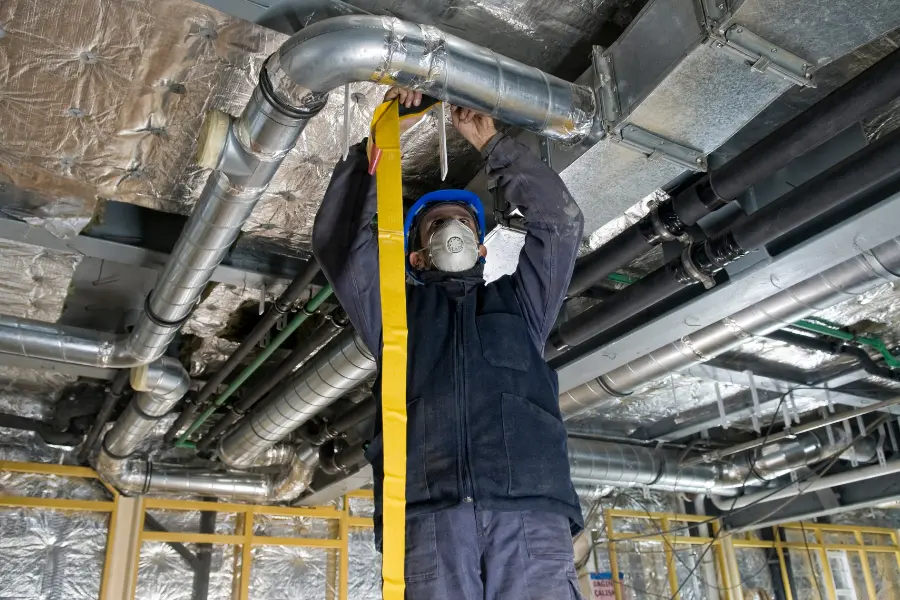
When we talk about ductwork, we’re talking about the network of metal or flexible tubes that move warm or cool air throughout your space. It’s a key part of your HVAC system and helps keep every room comfortable and consistent.
Whether you’re heating up your living room on a cold Kansas morning or cooling off the break room in the middle of summer, it’s the HVAC ductwork behind your walls and ceilings making it happen.
In short, your ducts are the delivery system for your heating and cooling. If they’re not working right, your comfort is affected.
Why It Matters to Homeowners and Business Owners
If your ducts are in bad shape, you’ll usually feel it before you see it. Here’s how duct issues can show up in your day-to-day:
- Some rooms are hotter or colder than others
- Your energy bill suddenly spikes
- You hear whistling or banging from your vents
- Dust builds up quickly on furniture and around registers
- The HVAC system runs constantly, but never quite feels right
Sound familiar? If so, your ductwork might be worth checking.
Is It “Ductwork” or “Duct Work”?
Let’s settle the debate. Ductwork (one word) is the correct term when you’re talking about the system itself. You might hear someone say ductwork (two words) in conversation, especially if they’re referring to service or repair work on the ducts. Both are used depending on the context, but ductwork is the more common form in HVAC conversations and documentation.
So the next time you’re searching online or chatting with a contractor, you’ll know the difference between ductwork and duct work and why both appear.
Types of Ductwork You’ll See in Homes and Buildings
Not all ducts are built the same. Depending on the size of your space, your HVAC system, and the layout of your home or building, you could have one or more types of ductwork. Here are a few you might come across:
- Sheet Metal Ducts
These are the sturdy, silver ducts often seen in basements or commercial ceilings. They’re strong and easy to clean. - Flexible Ducts
Often used in tight spaces. They’re lightweight and insulated, but they need proper support to avoid sagging. - Fiberboard Ducts
Made with compressed fiberglass and typically found in residential systems. They insulate well but can wear down over time.
Each type has its place, but what really matters is that your ductwork is sealed, clean, and properly sized for your HVAC setup.
5 Signs Your Ductwork Needs Some Attention
Most people don’t think about their ductwork until something feels off. Here are five signs it might be time for a closer look:
- Hot and Cold Spots Around the House
If one room is sweltering while another is freezing, airflow could be uneven or restricted. - Dust Buildup Around Vents
Extra dust around your vents may mean dirty or leaky ducts pulling in unfiltered air. - Rising Energy Costs
When ducts leak or aren’t sealed well, your system has to work harder. That shows up on your utility bill. - Unusual Noises
Popping, rattling, or hissing from the ducts might mean loose connections or pressure issues. - The System Feels Off
If your HVAC is always running but the air still feels weak or the temperatures aren’t right, the ducts could be the cause.
How Ductwork Affects Comfort and Airflow
Your duct system affects more than just temperature. It impacts air quality, energy use, and how hard your system has to work. Poorly installed or aging ductwork can:
- Let in dust and allergens
- Push uneven air through your space
- Create pressure problems
- Shorten the life of your HVAC equipment
Whether you’re in a single-family home or a large commercial space, having the right HVAC ductwork in place makes everything run smoother.
Let’s Make Sense of Your Ductwork
By now, you have a solid understanding of what ductwork is and why it’s important. It’s more than just hidden tubes behind drywall. It’s the system that keeps your air moving and your space comfortable. Knowing the different types of ductwork, spotting signs of trouble, and understanding the common confusion between ductwork and duct work gives you a clearer picture of how everything connects.
When your duct system is well-designed and in good condition, your HVAC works more efficiently and your home or building feels better overall.
Need Help with Your Ducts?
If you’re still asking what ductwork is and you’re not sure whether yours is working like it should, we’re here to help. At Green Seal Energy in Overland Park, KS, we work with homeowners and business owners to get airflow right. Whether it’s repairs, cleanups, replacements, or new installs, we’ll give you straight answers and a plan that fits.
Reach out today to schedule a consultation. Let’s make your space more comfortable. One duct at a time.